Most visitors to Badlands never leave the North Unit, the paved loop road with its overlooks and fossil trail. South of it, inside the Pine Ridge Indian Reservation, sits a second piece of the park entirely, the Stronghold Unit, co-managed by the National Park Service and the Oglala Sioux Tribe. It has no visitor center, barely any paved road, and, in places, live explosive shells still working their way out of the buttes eighty years after they were fired.
How that land ended up part of a national park, and why it's still owned and jointly run by the tribe whose reservation surrounds it, is a history most park brochures compress into a sentence. It deserves more than that.
133,300 Acres on the Pine Ridge Reservation
The Stronghold Unit, also called the South Unit, covers roughly 133,300 acres inside the Pine Ridge Indian Reservation, land owned outright by the Oglala Sioux Tribe rather than the federal government. It was added to what was then Badlands National Monument in 1976, under an agreement signed by tribal president Dick Wilson, and the two governments have co-managed it ever since. Unlike the North Unit's paved loop road and staffed overlooks, the Stronghold Unit has almost no infrastructure: gravel and dirt roads that depend entirely on the weather, no facilities, and long stretches of private land in between that the Park Service has no authority to let visitors cross.
What the Air Force Left Behind
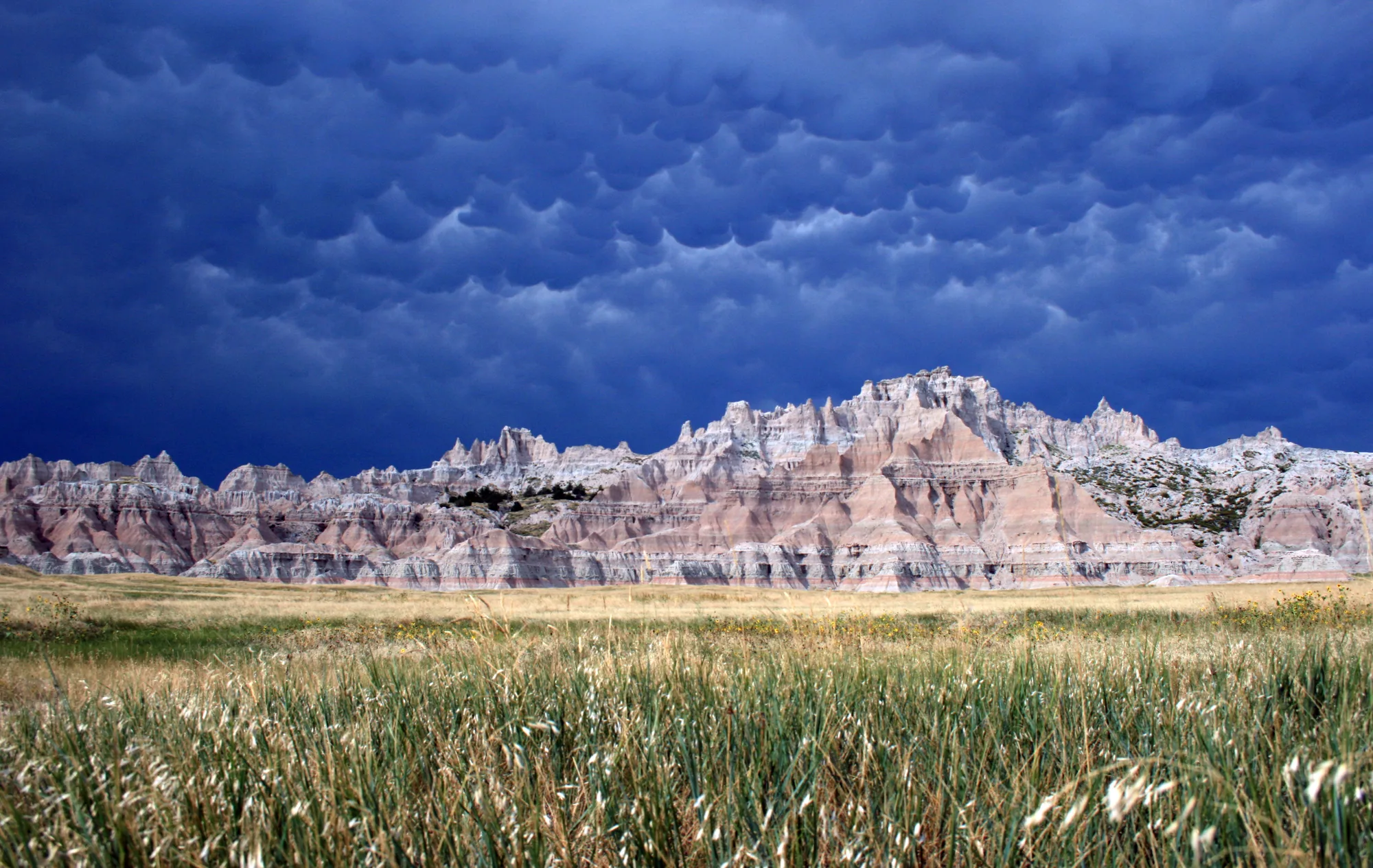
Before any of it was park land, the U.S. Army Air Forces used the area extensively as an air-to-air and air-to-ground gunnery range through the early 1940s, and the South Dakota National Guard continued using parts of it for artillery practice afterward, until the Air Force finally declared the property excess in 1968. Roughly 125 families were relocated off the land to clear it for the bombing runs. What that history left behind is still a real, current hazard: spent .50-caliber and 20mm shells turn up regularly, and larger explosive ordnance occasionally erodes out of the buttes on its own. The National Park Service's current guidance is direct: if you find something that looks like unexploded ordnance, back away and call the White River Visitor Center rather than touch it.
- Area ~133,300 ACRES
- Added to the park 1976
- Gunnery range use ended 1968
- Families relocated ~125
Plan a Trip Into the Stronghold Unit
Roads into the South Unit are unpaved and weather-dependent, with no facilities once you're in. The trip planner can help you prepare before you go.
Open the Trip PlannerStronghold Table
Stronghold Table, a broad, defensible mesa inside the unit, is identified by the National Park Service as the believed site of the last Ghost Dance of the nineteenth century, and it's still used today by young Lakota men for fasting and vision quests. The Ghost Dance was a spiritual movement built around the belief that a ritual dance could restore a world undisturbed by settler expansion, and it spread quickly among the Lakota in 1890. The movement alarmed nearby settlers and drew a military response. Chief Big Foot's band, followers of the Ghost Dance, were intercepted while traveling and the encounter ended in the massacre at Wounded Knee Creek on December 29, 1890, a killing the National Park Service's own historical materials describe as unfolding through what they call "a tragedy of errors," driven in part by sensationalized press coverage at the time.
An Unfinished Proposal
In the early 2010s, Interior Secretary Ken Salazar and then-NPS Director Jon Jarvis announced a proposal to establish the nation's first tribal national park at the Stronghold Unit, a plan that would have shifted primary management to the Oglala Sioux Tribe itself. A management agreement existed in principle by 2013, but it needed Congressional authorization that never came, and the tribal council later stepped back from pursuing the plan further. What's actually governed the land since 1976 is still the original joint-management agreement, unchanged in its basic structure even as the bigger proposal came and went.
Facts and figures checked against the National Park Service's own pages on the Stronghold District and the historical aerial gunnery range, NPS's Wounded Knee historical materials, the U.S. Department of the Interior's tribal national park announcement, and High Country News's reporting on the proposal's outcome.
Drive the paved loop through the North Unit and the Stronghold Unit doesn't come up unless you go looking for it, no overlook sign points toward it, no brochure map gives it equal weight. It's still there, gravel roads and all, still owned by the Oglala Sioux Tribe, still carrying both a spiritual history that predates the park by centuries and a military one that's barely eighty years old and hasn't finished leaving the ground. The proposal to formally hand it back never passed. The agreement that's actually in force is the one from 1976, quietly still doing the job.