The oral tradition names her Kaasteen, a young Chookaneidí woman confined to an isolation hut during her first menstruation, the way custom required, at a village called S'e Shuyee in what's now Glacier Bay. Bored and restless, she called out toward a glacier that hadn't moved from its place for as long as anyone remembered. "Glacier. Here. Here. Here." According to the tradition the Park Service itself now publishes, the glacier heard her.
It advanced, fast enough that the clans living below it had to flee by canoe, and it kept coming until it had buried the villages entirely. That single story is the reason Glacier Bay carries a Tlingit name that translates to Bay in Place of the Glacier, and it's the starting point for a displacement that would keep the Huna Tlingit away from this water for roughly two hundred years.
The Advance the Elders Still Tell
As the ice closed in on the villages of L'eiwshaayí, the Chookaneidí and neighboring clans evacuated by canoe, leaving behind food, furs, and robes as an offering to whatever had been provoked. Tradition holds that someone had to remain to appease the glacier's advancing spirit. Depending on which version of the story is told, that person was Kaasteen alone, her grandmother in her place, or both of them together, watching their homes settle under the ice as the rest of the clan paddled away.
The glacier didn't retreat quickly. Oral history puts the return at roughly fifty years later, long enough that the people who came back weren't the ones who'd left. When they did return, they renamed the bay Sít' Eeti Geiyí, and the tidewater glaciers left standing in it became something more than geography. The Chookaneidí claimed them as clan crests, a formal, lasting way of marking what their ancestor's sacrifice had cost.
Four Clans, Two Kwáans, One Ice Age
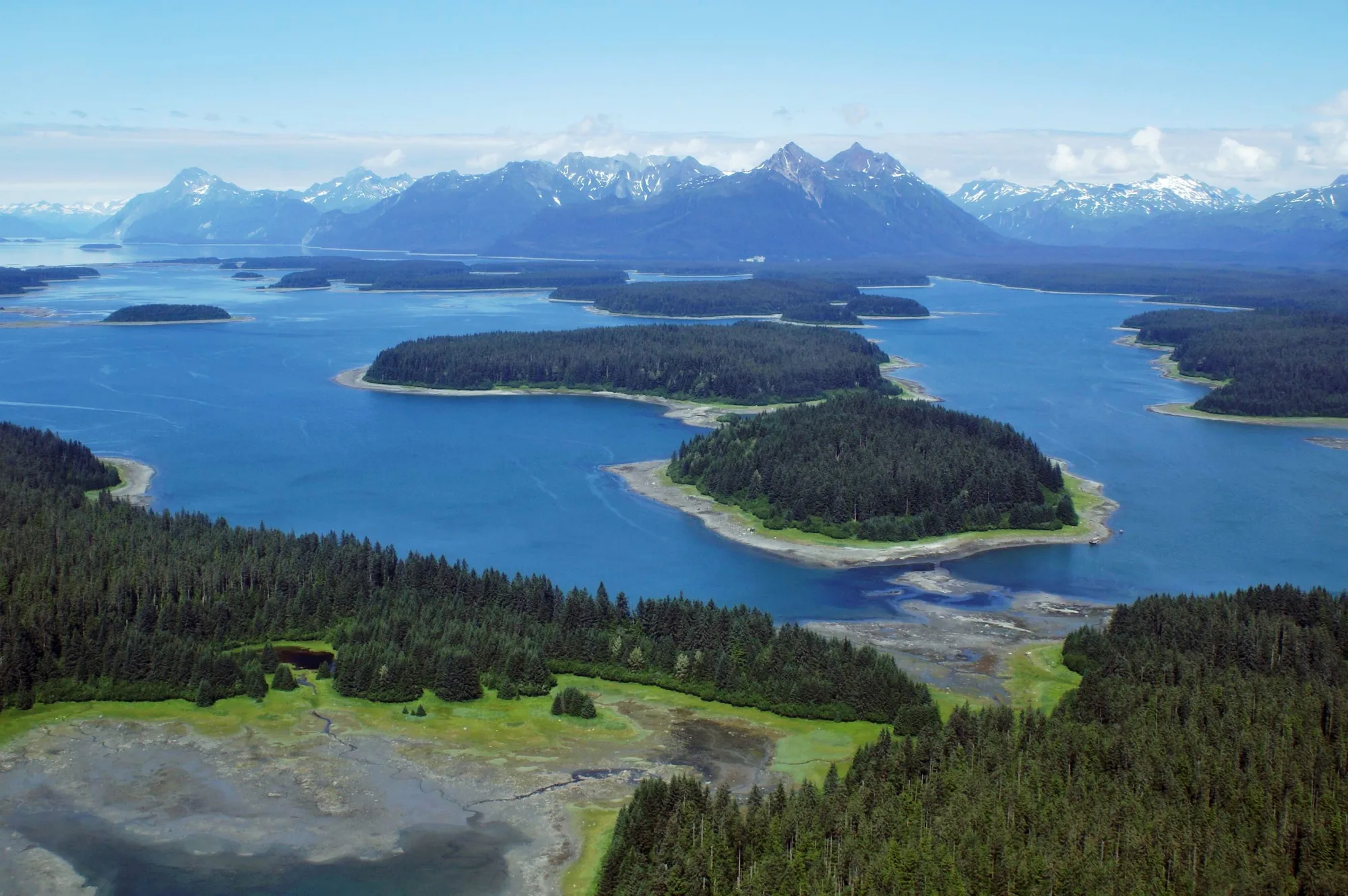
Before the ice advanced, this stretch of Southeast Alaska belonged to four clans, the Chookaneidí, Kaagwaantaan, Wooshkeetaan, and T'akdeintaan, organized into two kwáans, the Gunaaxoo Kwáan holding the northern coastal reaches and the Huna Kwáan settled across Glacier Bay proper, Icy Strait, and long stretches of the outer coast. In Tlingit understanding, this territory is at.óowu, meaning it was owned in a formal, inherited sense that carries obligations along with the claim, not simply land that happened to be occupied.
The advance that buried S'e Shuyee is generally placed, by both the oral tradition's own internal chronology and the geological record of the ice's documented maximum extent, in roughly the mid-1700s, decades before any European ship charted this coastline. When the ice finally began its retreat, it did so slowly enough, and far enough, that within a century it had split into the maze of separate glaciers still visible from a boat tour today. The Huna Tlingit's displacement outlasted the ice's own retreat by more than a century, for reasons that had nothing to do with the glacier and everything to do with what came after.
Plan Your Glacier Bay Visit
Xunaa Shuká Hít, the Huna Tlingit tribal house in Bartlett Cove, is open to visitors and worth building into a first day in the park. The trip planner can help you fit it in.
Open the Trip PlannerHoonah Was Never Meant to Be Permanent
Many of the displaced clans settled at Hoonah, on nearby Chichagof Island, a community the Huna Tlingit still call home today and the origin of the name Huna itself. The move was never framed as final. Return to Glacier Bay stayed part of the plan even as generations passed with the homeland still largely inaccessible, first behind retreating ice and later behind a 1925 national monument designation, and then 1980 national park status, that treated the bay primarily as wilderness rather than as anyone's ancestral home.
That changed on August 25, 2016, a date chosen deliberately: exactly one hundred years after the National Park Service itself was founded. Huna Tlingit paddlers traveled from Hoonah to Bartlett Cove in traditionally carved dugout canoes to dedicate Xunaa Shuká Hít, a clan house built in partnership with the park and standing today as a physical, permanent Huna Tlingit presence inside Glacier Bay National Park. One participant at the dedication put the moment plainly: they would never exit from Glacier Bay again.
A Tribal House Wasn't the Only Fight
For generations before the National Park Service existed, Huna Tlingit families gathered glaucous-winged gull eggs from rookeries in lower Glacier Bay each spring, a practice one elder later described simply as something the whole family looked forward to, like Easter. That harvest stopped in the 1960s, when the Park Service began enforcing the federal Migratory Bird Treaty Act inside the bay, cutting off a tradition that had nothing to do with the ice age but everything to do with who still had a right to use this place.
Reversing that took decades of its own. A 2010 environmental impact statement found the harvest wouldn't meaningfully harm gull populations. Congress passed legislation authorizing it in 2014, and the first experimental harvest under the new rules happened in May 2015. Since then, according to the National Park Service's own accounting, 982 eggs have been distributed to tribal members, with priority given to elders, and more than twenty trained Huna gull egg harvesters have taken part, several contributing directly to the seabird population data that keeps the harvest sustainable. The Department of the Interior now names it as one of only four programs nationwide it recognizes as a genuinely successful model of Tribal-Federal co-management.
- Ice reaches maximum extent ~MID-1700S
- Return & renaming to Sit' Eeti Geiyi ~50 YRS LATER
- Xunaa Shuka Hit dedicated AUG 25, 2016
- Gull eggs distributed since 2015 982, TO ELDERS FIRST
Facts and figures checked against the National Park Service's own published Kaasteen tradition and At.óowu: Tlingit Homeland articles, its Tribal-Federal Collaboration on Gull Egg Harvest account, and, for the four Huna Tlingit clan names, corroborating reporting from the Juneau Empire. Versions of the Kaasteen story vary on some details, including who stayed behind when the clans evacuated; we've presented that variation rather than picking one telling as definitive. We haven't repeated the claim, circulated in some secondary retellings, that the ice advanced "faster than a running dog," since we couldn't confirm it against a Park Service or academic source, and the Park Service doesn't publish a specific count of pre-ice village sites, so we haven't invented one.
Stand today at Xunaa Shuká Hít, the clan house in Bartlett Cove built from cedar and carved with the crests of the clans who once fled this exact shoreline, and the story comes full circle in a way S'e Shuyee's original evacuees couldn't have counted on. The glacier that answered a girl's call, buried a homeland, and then spent two and a half centuries slowly giving the land back is still visible from the water here, receding further every year. The people it displaced didn't just outlast it. They came back, built something permanent, and got the right to gather eggs on the same shoreline their grandmothers' grandmothers once fled by canoe.