
There is no flag on top of the highest point in Texas. There is a stainless steel pyramid, bolted to the rock, about the size of a phone booth, and it has been standing there since before most of the people who hike up to see it were born.
The Hardest Easy Elevation Gain in the State
Guadalupe Peak is 8,751 feet above sea level, the highest natural point in Texas, and the National Park Service will tell you flatly that you do not need technical climbing skill to reach it. What you need is a full day and about 3,000 feet of climbing packed into an 8.5-mile round trip, switchback after switchback up a desert mountain with almost no shade. It is, by the park's own description, a maintained strenuous day hike, and it is also the most popular one in the park, busy enough on weekends that the summit itself can feel crowded, a strange thing to say about a rock outcrop in one of the least-visited national parks in the country.
The trail does not ease up as a reward for effort. The last stretch runs along an exposed ridge where the wind picks up noticeably, the park's own guidance notes summit conditions run about ten degrees cooler and winds about ten miles per hour faster than down at Pine Springs, where the trailhead sits. People hike it year-round. Nobody hikes it casually.
- Elevation 8,751 FT · HIGHEST POINT IN TEXAS
- Round trip 8.5 MILES · ~3,000 FT GAIN
- Difficulty STRENUOUS · FULL DAY
- Summit conditions ~10°F COOLER · WINDS +10 MPH
Plan the Climb Before You Start It
An 8.5-mile strenuous hike with almost no shade needs water, timing, and a turnaround plan built ahead of time.
Open the Trip PlannerThe Summit Marker Is Older Than the Park Itself
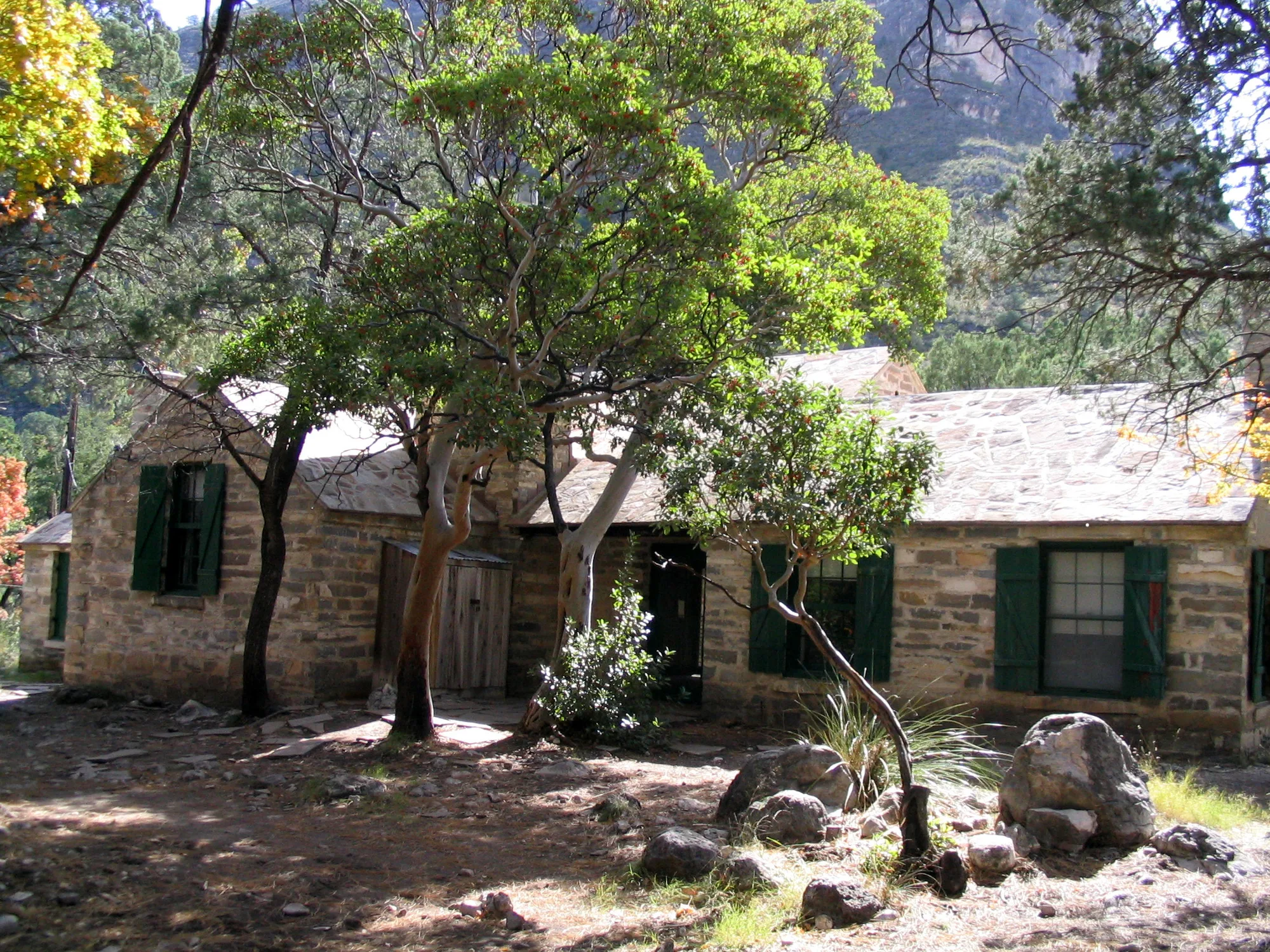
The pyramid at the top is stainless steel, and American Airlines put it there in 1958 to mark the hundredth anniversary of the Butterfield Overland Mail, a stagecoach line that once ran 2,800 miles from St. Louis to San Francisco. One of its way stations, a stone outpost called the Pinery, sat almost directly below the peak, at 5,534 feet the highest station on the entire route. The Pinery's actual working life was short. It opened in 1858 as little more than a timber corral and a couple of tents before a permanent stone building went up within two months, then it kept eight men busy feeding stagecoach passengers venison pie and baked beans, shoeing fresh horses, and fixing wagon wheels for coaches that rolled through four times a week. It closed in August 1859, not even a year later, when the route was rerouted through Forts Stockton and Davis for better military protection. The ruins are still there today, a wheelchair-accessible three-quarter-mile walk from the visitor center, stone walls standing at roughly waist height, all that is left of a business that lasted eleven months.
So the pyramid on the summit is not really a monument to the mountain. It is a monument to a stagecoach line that came through, briefly, a century earlier, on the flats below where hikers now park their cars. Guadalupe Mountains National Park would not exist for another fourteen years after American Airlines bolted that pyramid down, this corner of Texas had already been marking anniversaries of things that came and went long before it had a name people recognized.
- Built 1858 · STONE STRUCTURE WITHIN 2 MONTHS
- Operated ~11 MONTHS · CLOSED AUG. 1859
- Elevation 5,534 FT · HIGHEST STATION ON THE ROUTE
- Access today 0.75 MI, PAVED, FROM VISITOR CENTER
Elevation, trail mileage, elevation gain, and summit weather conditions checked against the National Park Service's official page for Guadalupe Peak. The Pinery station's construction date, staffing, operating dates, closure, and elevation checked against the National Park Service's official page for the Pinery. The 1958 American Airlines summit pyramid and its Butterfield Overland Mail centennial connection checked against the park's official Guadalupe Peak page.
Stand at that pyramid long enough and the math starts to feel strange. A stagecoach station ran for eleven months in 1858 and 1859. A metal marker went up a hundred years later to remember it. The park protecting both of them is younger than that marker. What hasn't changed in any of it is the mountain, 8,751 feet of limestone that was old before any of this happened and will be there long after the pyramid finally rusts through. You climb three thousand feet to stand next to a monument to something that barely lasted a year, on a peak that was never really the point.