
Just before midnight on November 27, 2022, instruments at the Hawaiian Volcano Observatory picked up what geologists had been waiting on for nearly four decades: Mauna Loa, the largest active volcano on the planet, was erupting again. It had been quiet since 1984, long enough that an entire generation of Hawaii Island residents had grown up never having seen it happen.
The mountain that woke up that night isn't just big in the way any volcano is big. Measured the right way, base to summit, it's taller than Everest. What makes its 2022 eruption worth understanding isn't only what it did, but how long it waited to do it, and how differently that story could have gone.
The Largest Active Volcano on Earth
Mauna Loa holds its record by volume and mass, not by the number most people reach for first. Its summit stands a modest 13,678 feet above sea level, well short of Everest's 29,032. But Mauna Loa doesn't start at sea level. Its true base sits on the floor of the Pacific, and measured from there to its summit, the mountain rises roughly 9,170 meters, taller than Everest measured the same way. Above the waterline or below it, the volcano covers about 5,271 square kilometers of Hawaii Island and contains somewhere between 65,000 and 80,000 cubic kilometers of rock, making it the largest active volcano on the planet by both mass and volume.
The Longest Mauna Loa Has Ever Gone Silent
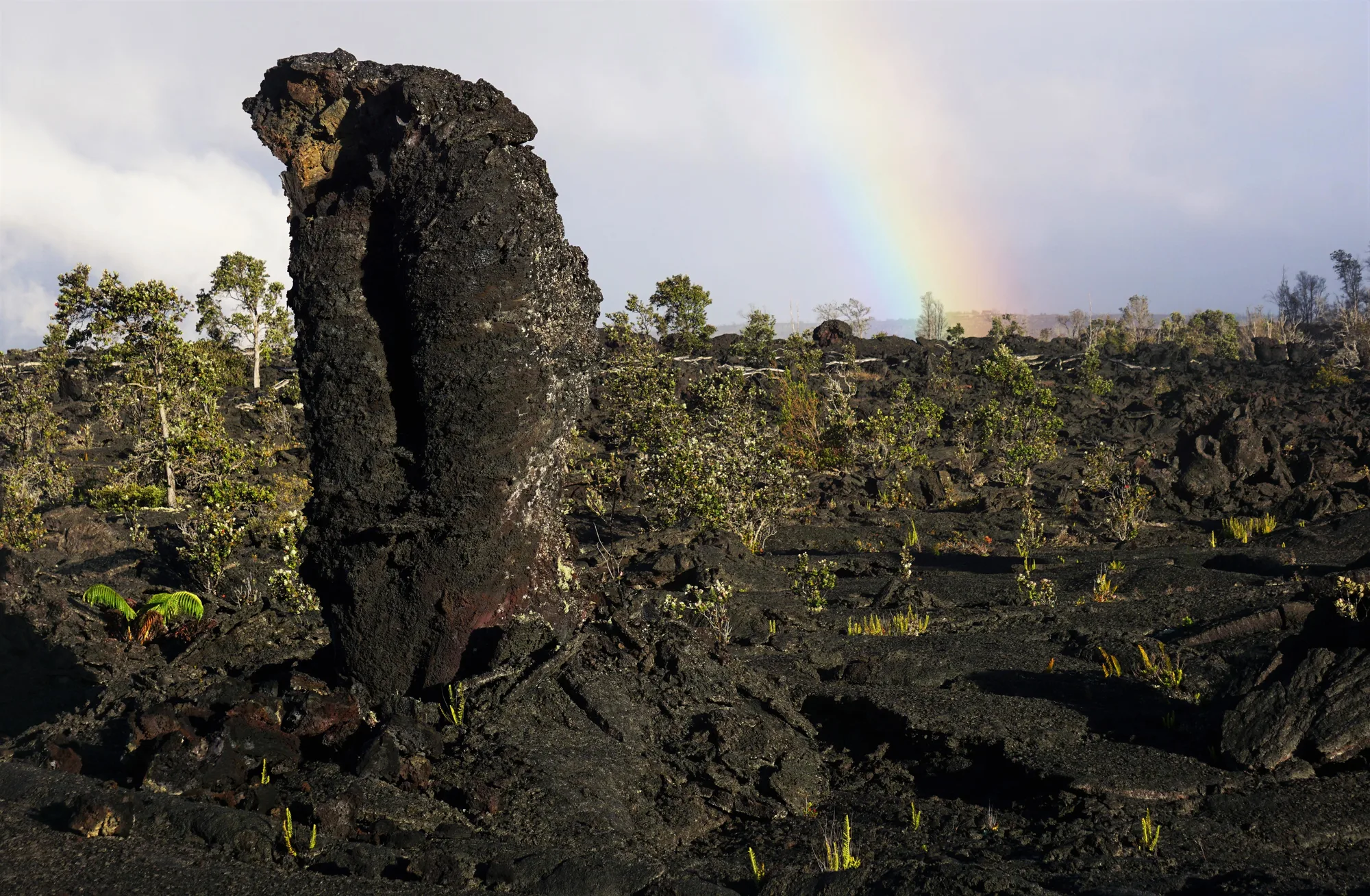
Mauna Loa is not a volcano that typically waits decades between eruptions. Its recorded history includes dozens of eruptions in the nineteenth and twentieth centuries, some barely a few years apart. The gap between the 1984 eruption and the one that began in November 2022, thirty-eight years, is the longest quiet period Mauna Loa has shown in its entire recorded record. Scientists at the Hawaiian Volcano Observatory monitored the mountain closely through that stretch, watching for the deformation and seismic activity that eventually did arrive in the weeks before it erupted again.
Plan Around an Active Volcano
Mauna Loa and Kilauea share the same park. The trip planner flags current eruption status and closures before you go.
Open the Trip PlannerNovember 27 to December 13
The eruption started at 11:30 p.m. Hawaii time on November 27, 2022, with fissures opening in Mauna Loa's summit caldera before activity migrated to the volcano's Northeast Rift Zone. Lava fountained from a chain of vents there for days, feeding flows that moved slowly down the volcano's broad, gently sloped flank. The eruption held on for roughly two and a half weeks, finally ending on December 13, a duration in line with several of Mauna Loa's twentieth-century eruptions rather than a lingering, long-term event.
- Eruption began 11:30PM HST, NOV 27
- Eruption ended 7:17AM HST, DEC 13
- Prior eruption 1984 (38-YR GAP)
- Land area (volcano) ~5,271 km²
Close to the Road, Not to Town
The flow that drew the most attention moved down Mauna Loa's Northeast Rift Zone toward Saddle Road, the highway connecting Hilo and Kona across the island's interior. By December 8, the leading edge had stalled about 1.7 miles short of the road, its advance slowed by the flatter ground it had reached and by a natural decline in the eruption's output. It never came close enough to threaten Hilo or either of the island's major highway corridors, though the flow did cut off road access to the Mauna Loa Observatory, stranding the facility until the eruption ended and crews could reach it again. For an eruption from the largest active volcano on Earth, after the longest quiet stretch in its recorded history, the actual toll on people and infrastructure was small: a stalled flow, a closed access road, and a lot of very close monitoring that turned out not to be needed.
Facts and figures checked against USGS Hawaiian Volcano Observatory published records of the November–December 2022 Mauna Loa eruption and NPS.gov's materials on Mauna Loa.
The instruments that caught Mauna Loa waking up just before midnight on November 27 had been listening for thirty-eight years for exactly that signal. When it finally came, the mountain that could out-measure Everest from its true base spent nineteen days doing something it does every so often, and then went quiet again, still the largest active volcano on the planet, still being watched, still capable of picking a very different flank to erupt from next time.