Indiana Dunes National Park sits an hour from downtown Chicago, wedged between a steel mill and a nuclear plant, and nothing about the drive in suggests a real scientific idea got its start here. But in 1899, a University of Chicago botanist named Henry Chandler Cowles published a paper built almost entirely on fieldwork done inside what is now this park's boundaries, and the idea in it became one of the founding concepts of modern ecology.
That idea has a name, ecological succession, and you can still watch it happen in real time on a trail barely a mile long. This is a guide to five stops that trace what that means: a science born on a sand dune, a fur-trading crossroads two centuries older than the park itself, a marsh that had to be rebuilt after industry nearly killed it, and, a few miles down the shore, five houses built for a Chicago World's Fair that made the trip here by barge.
The route runs west to east, roughly the direction this shoreline itself has been building for thousands of years: from West Beach near the park's western entrance, through the farmland and marsh in the middle, out to a quiet trail near Chesterton on the eastern edge. Budget three to five hours to get out of the car at every stop. One well-known dune along the way, Mount Baldy, isn't on this list on purpose: its summit has been closed to hikers for years over real sand-collapse risk, and even after an Army Corps of Engineers project moved 27,000 tons of sand to reopen the beach below it in 2026, the dune face itself is still off-limits.
A Forest's Whole Life, in Under a Mile
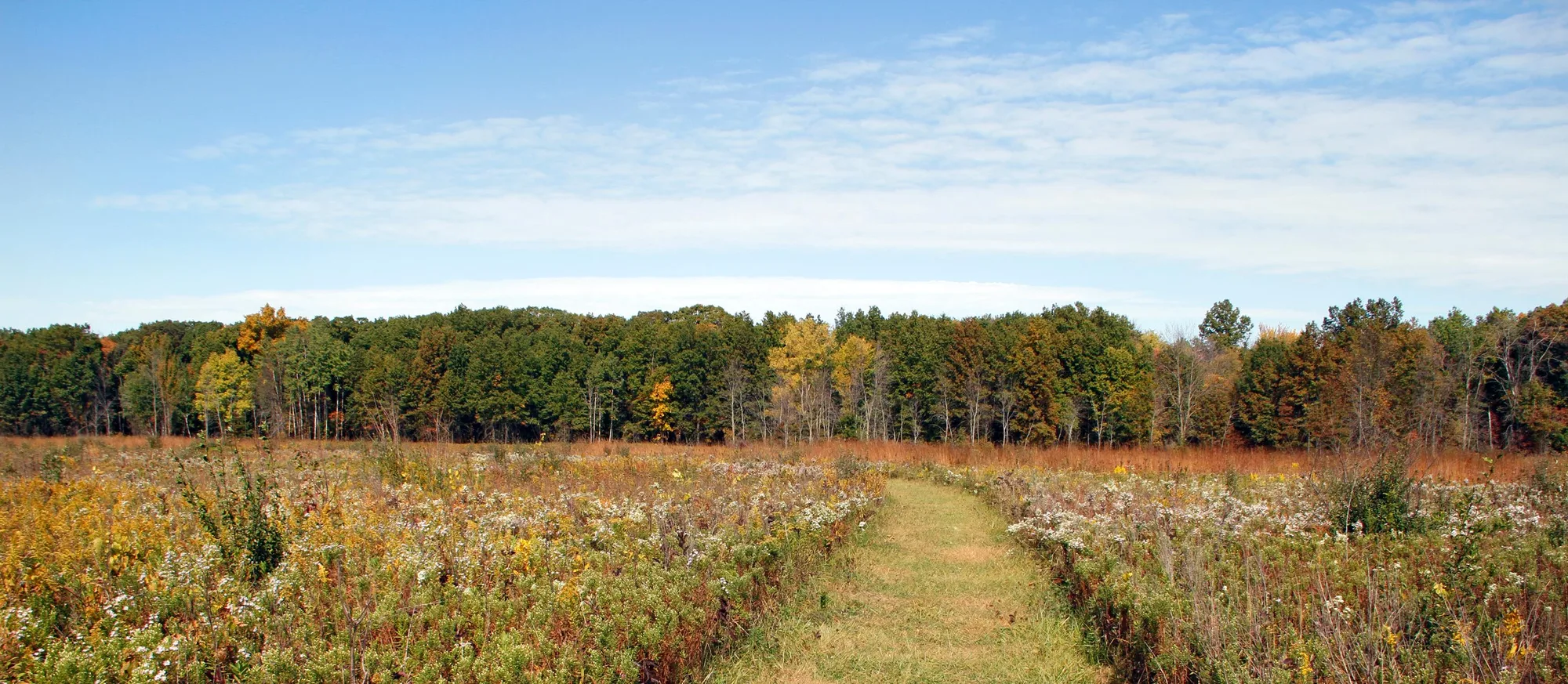
West Beach is the park's most-visited stretch of shoreline, but the real destination for this stop sits just behind it, on the Dune Succession Trail, a loop just under a mile long that starts on bare, still-shifting sand and ends in a mature stand of black oak. In between, in an order you can watch change as you walk, marram grass takes hold first, tough enough to root through moving sand and slow it down long enough for something else to follow. Cottonwood comes next, then jack pine, then finally the oak, on ground stable enough, after all that work, to support a real forest. You are not looking at six different places. You are looking at one place, at six different ages of itself.
That process, plants arriving in a fixed order as the ground beneath them stabilizes, is called ecological succession, and it is one of the founding ideas of modern ecology. The half-mile you just walked is not only scenery. It is close to the same evidence a scientist used, a few miles down the shore, to found an entire field of science, doing today almost exactly what it was doing when he first wrote it down.
A Trading Post Built at a Real Crossroads
In the early 1820s, a French-Canadian fur trader named Joseph Bailly built a trading post here, at the point where the Little Calumet River crossed a well-used trail running between Detroit and Fort Dearborn, the small outpost that would later grow into Chicago. That was not a random choice of scenery. It was the same logic that puts a gas station at a highway interchange today: put your business exactly where the traffic already is. Bailly married Marie Le Fevre de la Vigne Bailly, who was of Odawa heritage, and for over a decade this homestead sat at a genuine junction of cultures and commerce in a landscape with almost no other fixed points on it at all. The National Park Service's own history of the site is candid that the same relationships and influence that made Bailly successful here also became entangled with the treaty negotiations that led to the forced removal of Potawatomi people from the region, completed by 1838 on what is now known as the Trail of Death.
A short walk from the Bailly homestead is Chellberg Farm, bought in the 1870s by Swedish immigrants Anders and Johanna Kjellberg. Three generations of their descendants worked this land, and starting in the 1930s the family began producing maple syrup here, a practice the farm still demonstrates today. Where Bailly's story is about a crossroads built for trade, the Chellbergs' is about a family that stayed put for a century, on ground that had already seen fur traders, treaty politics, and one river crossing come and go before they ever arrived.
- EARLY 1820s BAILLY TRADING POST ESTABLISHED
- 1870s CHELLBERG FARM PURCHASED BY SWEDISH IMMIGRANTS
- 1899 COWLES PUBLISHES HIS SUCCESSION RESEARCH
- 1965 COWLES BOG NAMED A NATIONAL NATURAL LANDMARK
- 1966 INDIANA DUNES NATIONAL LAKESHORE ESTABLISHED
- FEB. 15, 2019 REDESIGNATED INDIANA DUNES NATIONAL PARK
Turn This Route Into a Real Plan
Pick your dates and your crew: the AI trip planner builds the day-by-day for Indiana Dunes, drive times between stops included.
Open the Trip PlannerThe Ground Where Someone Wrote It Down
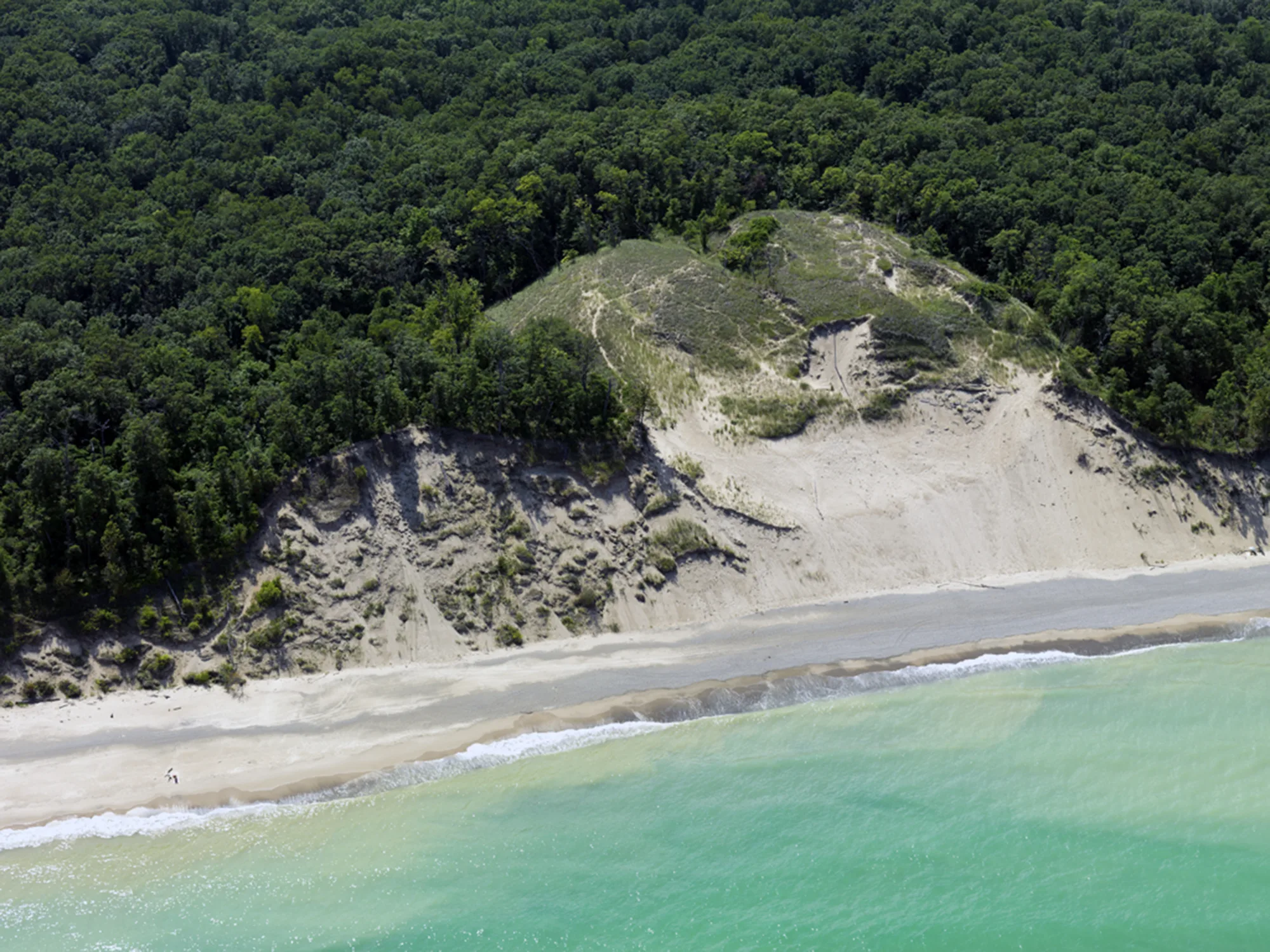
Henry Chandler Cowles finished his University of Chicago doctorate in 1898 on this exact ground, and in 1899 he published "Ecological Relations of the Vegetation on the Sand Dunes of Lake Michigan," describing something nobody had laid out this clearly before: that a landscape's plants change in a predictable sequence over time, not randomly, and that you could trace the whole sequence by walking a few hundred yards in the right direction. He went on to help found the Ecological Society of America in 1915. This bog and the wetland around it were named a National Natural Landmark in 1965, largely because Cowles's fieldwork here is considered a founding moment of ecology as a modern science.
The Great Marsh beside this trail is roughly four thousand years old and runs twelve miles along the shoreline, and for most of the twentieth century it did not fare nearly as well as Cowles's original study site did. Industrial dune removal nearby in the 1960s altered how water moved through the wetland, and NPS's own records are specific about what happened next: between 1961 and 1979, the native sedges, grasses, and wildflowers that once covered 135 acres collapsed to just 16, while invasive cattail spread from 9 acres to 99. The park is now years into a restoration projected to take ten to fifteen years and cost between 1.4 and 1.6 million dollars, funded through a mix of the National Park Service, the Great Lakes Restoration Initiative, and local land trusts.
Cowles studied this marsh as an example of nature working exactly as it should. What you are looking at now is the opposite project.
Houses That Made the Trip by Barge
About half a mile east of this parking lot, along Lake Front Drive, sit five houses that look wrong for their surroundings on purpose: flat roofs, glass walls, curved steel, architecture that reads as 1960s modern even though it isn't. They were built for Chicago's 1933–34 Century of Progress World's Fair, in an exhibit called Homes of Tomorrow, and when the fair closed they weren't torn down. Two years later, in 1935, four of the five were loaded onto barges and floated across Lake Michigan to be rebuilt here; the fifth, a cypress log cabin, made the trip by truck instead.
They aren't simply private property today, either. The National Park Service owns the land and leases the houses long-term to the nonprofit Indiana Landmarks, which has restored and subleased four of the five to tenants who maintain them under strict preservation terms; the fifth, the House of Tomorrow, still sits unrestored. None of the five are open to walk up to, so the half-mile from here is a drive-by view from the road, not a house tour, and that's still enough to see architecture from a 1933 world's fair sitting inside a national park that wouldn't exist for another four decades.
The Birds Left. The Name Didn't.
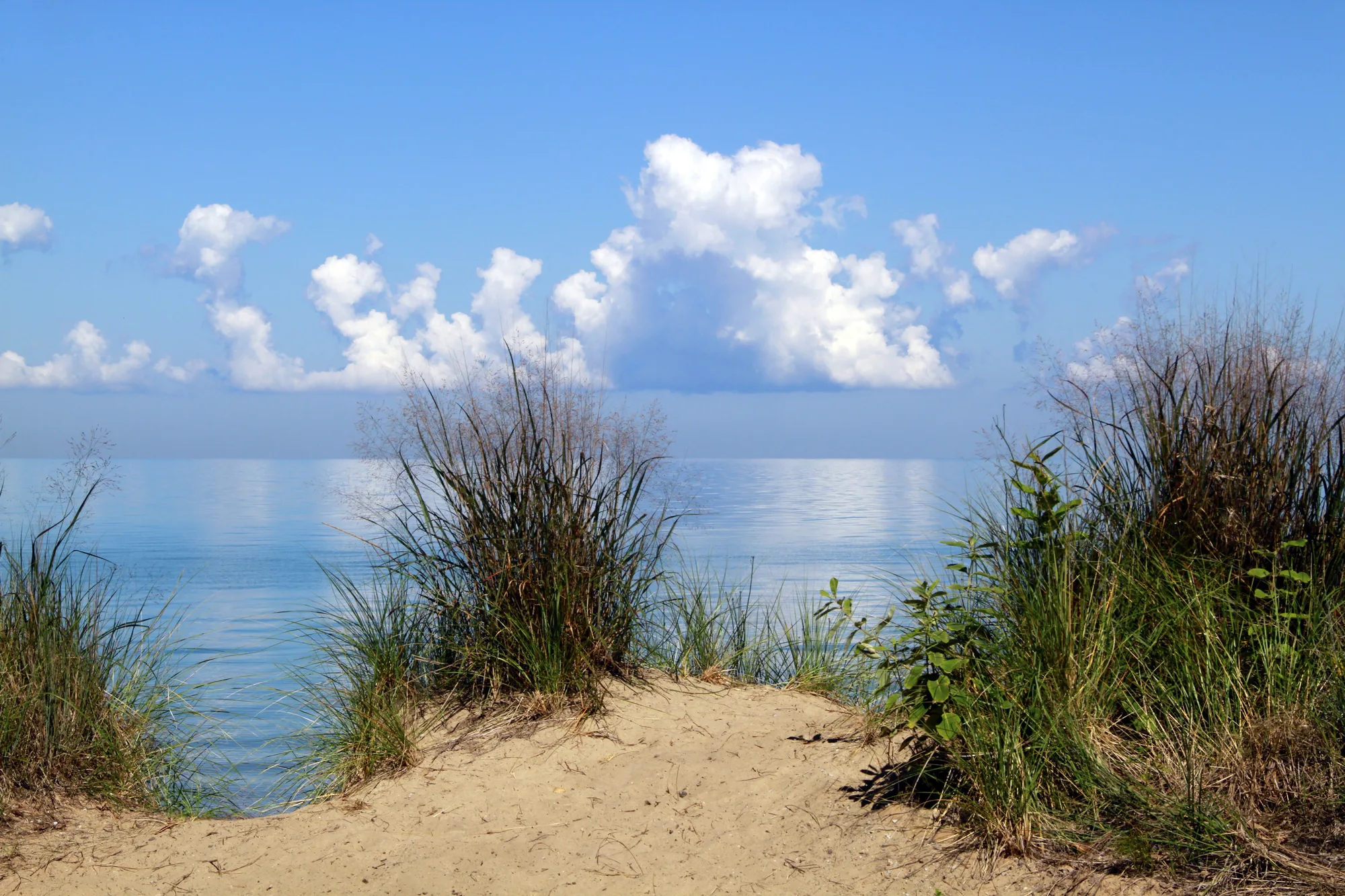
This stretch of floodplain forest along the Little Calumet River once held more than a hundred Great Blue Heron nests, according to the park's own records, enough that the name stuck permanently even after the herons themselves eventually moved to new nesting grounds, following roughly six decades here. Nobody renamed the trail when they left. It's still the Heron Rookery, a name that now describes what this place used to be more than what it currently is.
What the trail offers instead, by the park's own description, is the most extensive spring wildflower display anywhere in Indiana Dunes: trillium, spring beauties, Dutchman's breeches, and wild ramps, blooming in a window from late April through mid-May, before the trees leaf out and shade the forest floor again. It's a genuine trade, one kind of spectacle for another, and it means this stop rewards timing more than any other on the route. Come in high spring and the forest floor does something dramatic. Come in August and you're mostly walking through the quiet, secondhand memory of birds that moved on decades ago.
Back at West Beach, the same dune trail that opened this route is still doing what it was doing in 1899: turning bare sand into forest, one plant community at a time, on a schedule measured in decades rather than a single visit. The Great Marsh a few miles inland is now trying to earn its way back to something like that same mature, settled state, not by nature working alone this time but by people spending over a decade and more than a million dollars to help it along. The dunes taught Cowles that a forest grows in a fixed, patient order. The marsh is the same lesson, run in reverse, by people who are still working to prove it holds.
The park's 1966 establishment as Indiana Dunes National Lakeshore and its February 15, 2019 redesignation as a national park checked against NPS.gov's own "Renamed National Park" news release. Henry Chandler Cowles's 1898 doctorate, his 1899 succession paper, and his 1915 role founding the Ecological Society of America checked against Wikipedia's entry on Cowles; Cowles Bog's 1965 National Natural Landmark designation checked against Wikipedia's Cowles Bog entry. The Great Marsh's 1961–1979 vegetation loss, restoration timeline, and cost checked against NPS.gov's own Great Marsh restoration page. Joseph Bailly's trading post and the treaty history connected to Potawatomi removal checked against NPS.gov's Bailly Homestead page; the founding year is a genuine conflict between sources (NPS says "around 1824," other sources say 1822 with no hedge), so this piece says "the early 1820s" rather than pick one silently. The Century of Progress homes' 1935 move, four-by-barge-one-by-truck detail, and their current NPS-to-Indiana-Landmarks lease arrangement checked against NPS.gov's own Century of Progress history page. Heron Rookery's nesting history and spring wildflower window checked against NPS.gov's Heron Rookery Trail page. Mount Baldy's 2026 closure status and the Army Corps sand-relocation project checked against NPS.gov's "Mount Baldy Reopens 2026" news release.