Pinnacles covers about 109 square kilometers, a modest footprint as national parks go. Packed into that ground, researchers have documented 450 different species of native bee, more kinds of bee than most people will ever knowingly see in a lifetime.
The Highest Bee Diversity Ever Recorded in One Place
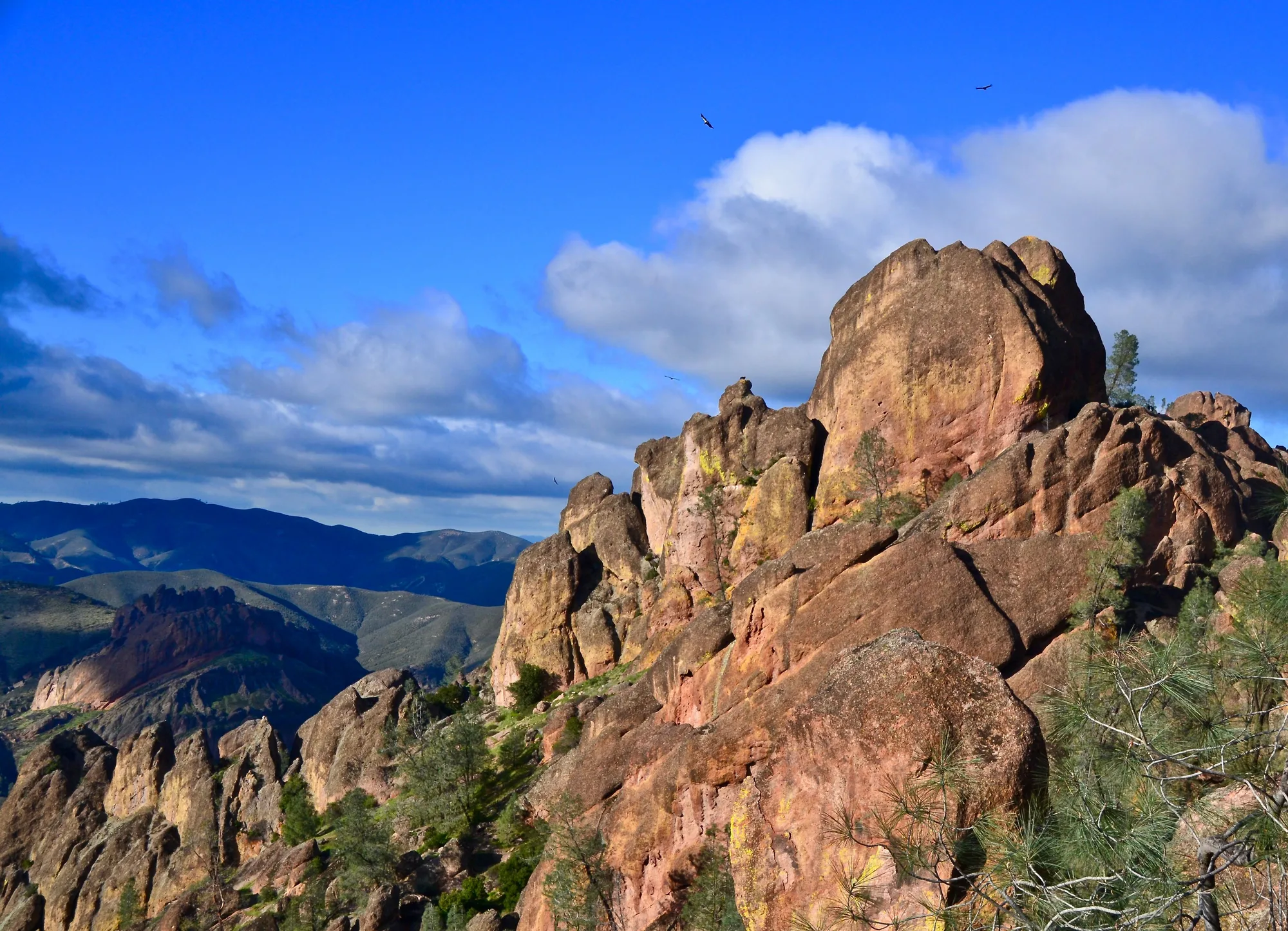
A peer-reviewed survey published in the journal PLOS ONE documented 450 native bee species across 53 genera within the park, a figure the researchers themselves describe as the highest bee biodiversity per area surveyed of any exhaustive bee study published for a natural area in the United States. The National Park Service's own materials round that up further, citing nearly 500 species and noting that more than 260 species have been found along the Old Pinnacles Trail alone, a single 2.3-mile stretch.
That's an extraordinary number for a park this size, and it puts Pinnacles in genuinely rare company among protected areas anywhere, not just within the National Park System.
Plan Your Pinnacles Visit
Spring wildflower bloom is peak bee season. Time a visit for late March through May to see the most activity.
Open the Trip PlannerDecades of Watching, Not Just Good Habitat
The study's own authors flagged an important caveat: Pinnacles has been surveyed for bees since the 1930s, longer and more intensively than most comparable sites, and that sampling history may partly explain why its documented diversity looks so high relative to other places. A park nobody has studied as closely simply hasn't had the chance to rack up a comparable count, whatever its actual bee population looks like.
That honesty doesn't erase the record, it just contextualizes it. Pinnacles really does host an unusual range of chaparral, oak woodland, and rocky outcrop habitat in a small area, which genuinely supports a wide range of specialist bees. The number is real. Whether it's the single highest bee diversity on the continent, or just the most thoroughly counted, is a harder question, and the scientists who found it said so themselves.
- Documented native bee species 450 (PEER-REVIEWED)
- NPS's rounded figure ~500
- Species along Old Pinnacles Trail alone 260+
- Surveyed since 1930s
Bee species count and methodology checked against the peer-reviewed survey published in PLOS ONE (Messinger Carril et al.), cross-referenced against the National Park Service's own bee page for Pinnacles. Where NPS's rounded figure (nearly 500) differs from the peer-reviewed count (450), the peer-reviewed number is used as the primary figure, with NPS's framing noted as supporting context. The study's own sampling-intensity caveat is included rather than omitted.
Most visitors come to Pinnacles for the rock formations or the condors overhead and never look down at what's working the wildflowers along the trail. Those small, mostly solitary bees, not the honeybees most people picture, are the actual record holders here, four hundred fifty species deep in a park you could drive across in under an hour.