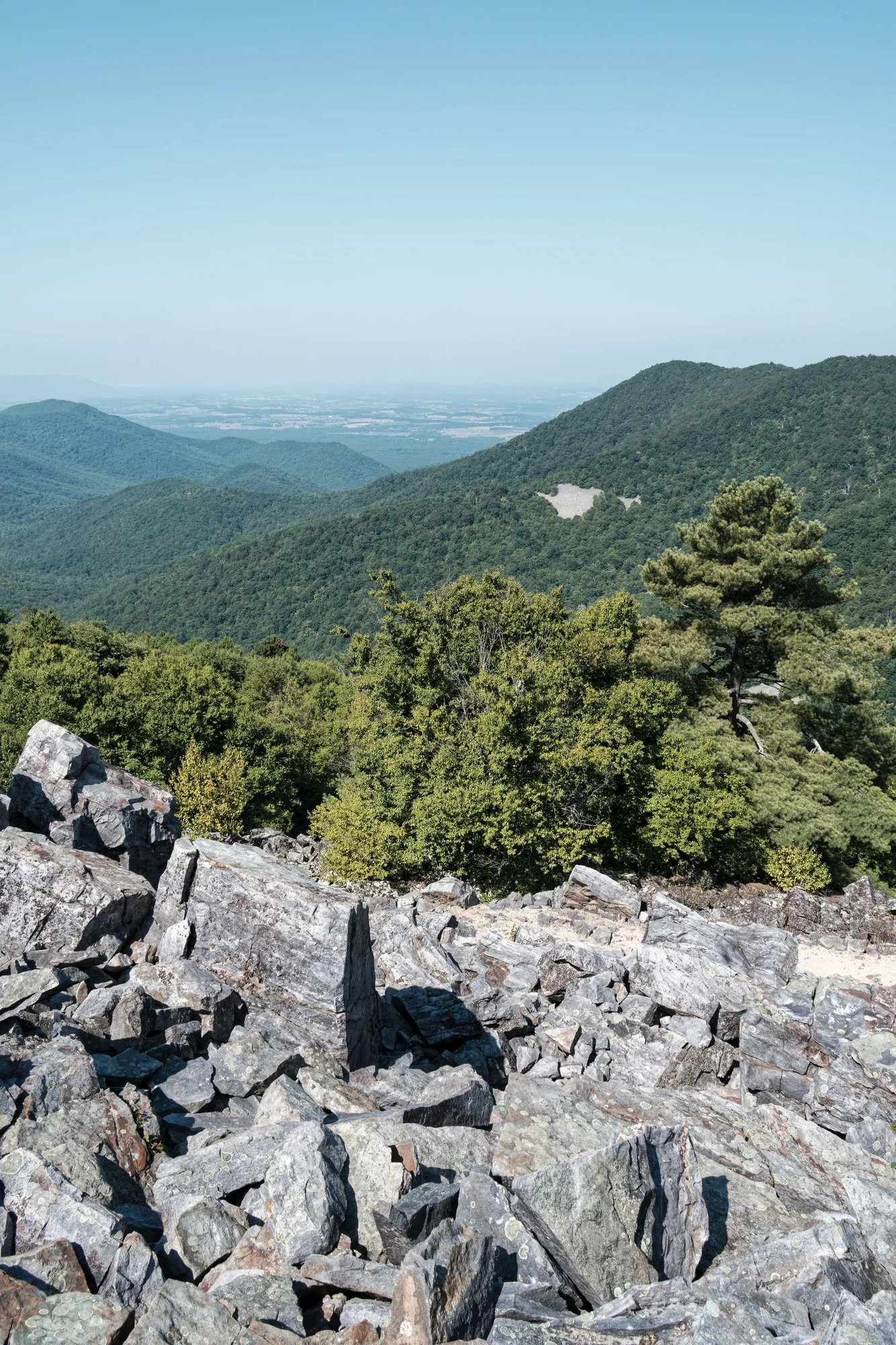
Shenandoah National Park is often described as wilderness reclaimed, ridgelines and hollows returned to nature after a century of farms and logging camps. That's true as far as it goes, but it skips the part that made it possible: before Shenandoah could open in 1935, the Commonwealth of Virginia and the federal government had to acquire more than five thousand separate parcels of land, most of them lived on, worked, and owned by people who did not particularly want to leave.
Nearly ninety percent of the people living on that land made their living directly from it, selling timber, charcoal, or crops. Unlike Yellowstone or Yosemite, carved from land the federal government already controlled, Shenandoah had to be emptied first.
A Park That Had to Be Bought Piece by Piece
Congress authorized Shenandoah National Park in 1926, but authorizing it and actually owning the land were two different problems. Virginia had to acquire more than 5,000 separate parcels across eight counties along the Blue Ridge before the land could be transferred to the federal government, a process that dragged on for most of a decade. Ownership situations varied wildly: some families held clear title going back generations, others were tenant farmers, and some were squatters with no legal claim at all, which meant they qualified for no compensation whatsoever when the state came to clear the land.
The park officially opened on December 26, 1935, a date that came after most of the hard, unglamorous work of buying out an entire mountain community, tract by tract, had already finished.
Corbin Cabin
George T. Corbin built a log cabin in Nicholson Hollow in 1909, on land his family worked the way most mountain residents in this stretch of the Blue Ridge did, farming what the slopes allowed and getting by. He was forced off that land in 1938, years after the park's official opening date, since the messy work of individual displacements didn't stop just because a dedication ceremony had already happened. His cabin is one of the few original mountain structures the park kept standing rather than demolished, and the Potomac Appalachian Trail Club maintains it today as a rentable backcountry cabin, reachable by the Nicholson Hollow Trail.
Most homes here weren't so lucky. The Civilian Conservation Corps and the park's early staff cleared the majority of mountain structures once families left, on the theory that a wilderness park needed to look like wilderness, not like a recently abandoned farm town.
Walk Into the History Yourself
The Nicholson Hollow Trail passes Corbin Cabin directly. The trip planner can route it into a full day on Skyline Drive.
Open the Trip PlannerThe Forty People Allowed to Stay
Not everyone was required to leave immediately. About forty people, elderly or otherwise judged unable to easily relocate, were placed on what became known as the Ickes list, allowed to remain in their homes inside park boundaries for the rest of their lives rather than being displaced along with everyone else. It was a narrow exception in an otherwise sweeping removal, granted case by case rather than as a matter of policy, and it meant that for decades after Shenandoah opened to the public, a small number of the mountain's original residents were still living out their lives inside the park that had replaced their community.
Annie Lee Bradley Shenk
Annie Lee Bradley Shenk, remembered as the last grandmother resident permitted to stay under the Ickes arrangement, died in 1979 at the age of 92. Her death closed out a specific, quiet coda to Shenandoah's founding: for nearly half a century after the park's dedication, a handful of people who remembered the mountain before it was a park were still, technically, living inside it, watching visitors drive Skyline Drive past land their families used to farm.
- Land parcels acquired MORE THAN 5,000
- Park established DECEMBER 26, 1935
- Residents on the Ickes list ABOUT 40
- Last resident's death 1979
Facts and figures checked against NPS.gov's Shenandoah history materials and published historical records on the park's land acquisition and resident displacement, including the Ickes list and Corbin Cabin's preservation history.
Corbin Cabin still stands in Nicholson Hollow, one small structure out of what was once an entire mountain community. Everything around it that isn't forest again today used to be someone's field, and for a while, a very small number of someones were still allowed to watch it happen from the porch.