
Hurricane Irma hit St. John on September 6, 2017. Hurricane Maria followed ten days later. Between them, they did to the island's reefs what decades of ordinary wear never could.
A Reef Ecosystem, Measured Before and After
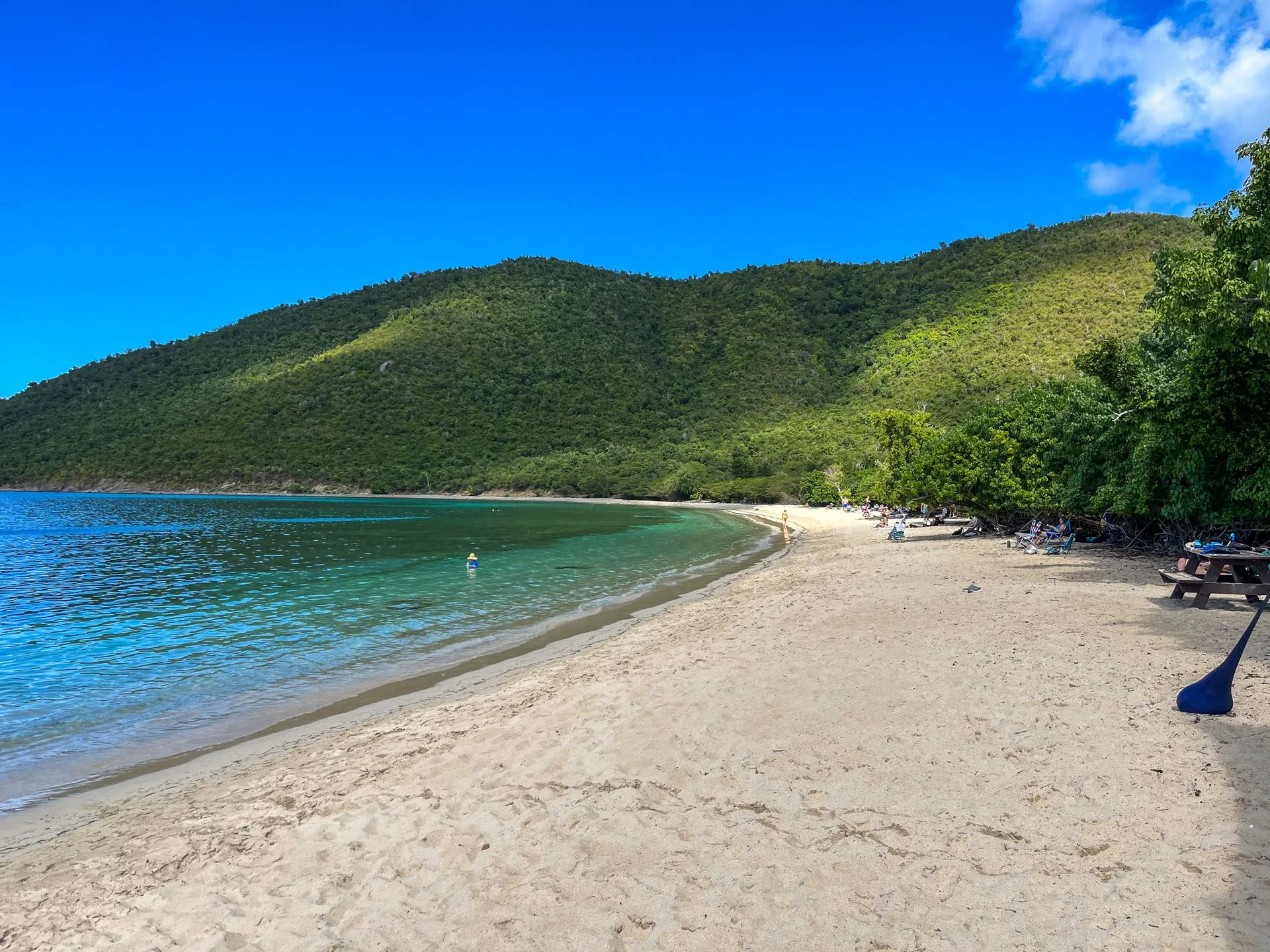
Before the storms, the mangrove prop-root communities ringing St. John's bays supported roughly 30 species of stony coral, 60 species of sponge, and 80 species of fish, according to a peer-reviewed survey by USGS marine biologist Caroline Rogers. Irma made direct landfall on September 6, 2017. Maria followed September 16 through 18, and the park evacuated ahead of it.
Rogers returned about five months later, in February 2018, and found destruction of the prop-root marine communities approaching 90 to 100 percent in some surveyed areas. Four endangered coral species had survived the storms, but many individual colonies were overturned or buried in sediment.
Plan Your Virgin Islands Visit
Trunk Bay's underwater snorkel trail is still one of the best ways to see the reef today. Build it into a trip.
Open the Trip PlannerCoral Doesn't Recover on a Human Timeline
Rogers's research points to a hard limit on how fast any of this comes back: reef-building coral typically grows less than a centimeter a year. A colony that took decades to reach its pre-2017 size doesn't regrow in a single hurricane season, or several. The National Park Service's own hurricane recovery reporting on the park describes years of ongoing assessment across the storms' full damage, not a quick before-and-after story.
What Rogers's survey makes clear is that this wasn't a uniform wipeout. Some bays and some coral species fared far better than others, which is part of why NPS and outside researchers keep returning to monitor specific sites rather than declaring the reef simply "recovered" or "lost."
- Hurricane Irma SEPT 6, 2017
- Hurricane Maria SEPT 16-18, 2017
- Prop-root community loss UP TO 90-100% IN SURVEYED AREAS
- Coral growth rate LESS THAN 1 CM/YEAR
Hurricane dates checked against the National Park Service's own hurricane recovery page for Virgin Islands National Park. Pre- and post-storm species counts and the 90-to-100-percent prop-root loss figure come from a peer-reviewed 2019 study by USGS scientist Caroline Rogers published in the journal Diversity, not from an NPS page directly, and describe specific surveyed sites rather than the reef system as a whole.
Snorkel Trunk Bay's underwater trail today and the reef still looks like a reef, color and structure and fish moving through it. What Rogers's numbers add is the part a snorkeler can't see: how close some of it came to not being there at all, and how many more centimeter-a-year seasons it will take before it's what it was.