Most national parks have a best time to visit that's really just a preference. Glacier has one that's partly out of anyone's control. Going-to-the-Sun Road, the 50-mile drive that connects the park's two sides and reaches the alpine terrain most people come for, opens whenever the snowpack lets it, and that date moves by close to a month from year to year.
That single fact drives most of the planning decisions on this page. Visit too early and the road, and a lot of the park's best hiking, is still under snow. Visit at the busiest point in summer and you get full access but you're sharing it with everyone else who had the same idea, plus a parking system that changes almost every year. This guide walks through what's actually open, month by month, based on what Glacier's own park service pages and 2026 season updates say right now, not on a fixed date carried over from a past year.
Glacier's entrance fee is $35 for a private vehicle on a 7-day pass ($25 in winter, November 1 through April 30), $30 for a motorcycle, and $20 per person on foot or bike. That part doesn't change by season. Almost everything else does.
Low Country Open, High Country Still Buried
The Glacier you have in your head, the one with a road over an alpine pass, isn't open yet. What you get instead is a quiet park at valley level.
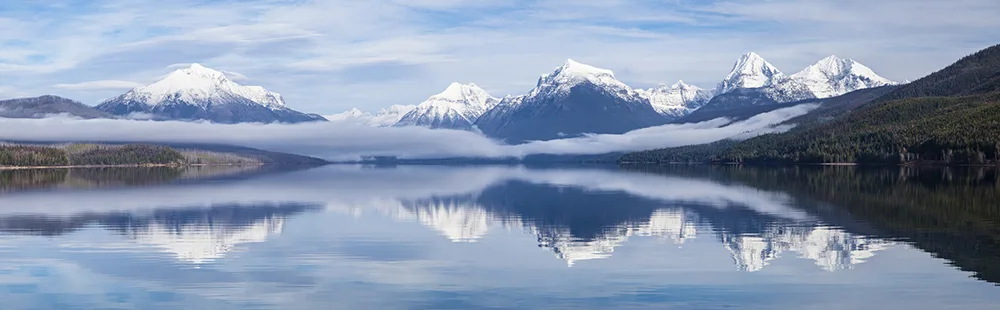
Plowing on Going-to-the-Sun Road usually starts in April, and it's slow work. Crews clear snowdrifts that can run 20 to 80 feet deep near Logan Pass, and the road stays closed to vehicles well past the point where it's clear elsewhere in the park. Through most of spring, visitors can drive as far as Lake McDonald Lodge and Avalanche Creek on the west side, and to Rising Sun on the east side, with everything above that still shut down.
What spring does have going for it: waterfalls running at their fullest from snowmelt, bears coming out of winter denning and often visible at lower elevations before summer vegetation grows in, and almost nobody else around. Lodging inside the park is mostly closed until Memorial Day weekend, and weather swings hard, warm and sunny one day, snowing at Lake McDonald elevation the next. None of the vehicle access rules that apply in peak summer are relevant yet, since the high-traffic areas they cover aren't reachable by car in the first place.
- Open West Glacier, Apgar, Lake McDonald to Avalanche Creek, St. Mary to Rising Sun ROADS
- Closed Logan Pass and the alpine section of Going-to-the-Sun Road TYPICALLY THROUGH JUNE
- Crowds Lightest of the year outside winter GOOD FOR SOLITUDE
The Long, Unpredictable Wait For The Full Road
There's no fixed opening date for Going-to-the-Sun Road, and that's the single most important thing to know before booking anything.
Full road openings over the past 15 years have landed anywhere from June 13 to July 13. In 2025 the road opened June 13, unusually early. In 2026 it opened June 22. In heavier snow years, 2011, 2020, and 2022 among them, plowing crews didn't finish until July 13. The park posts a projected opening date on nps.gov/glac once crews get close, usually with a few days' notice, and that's the only reliable way to know before a specific trip.
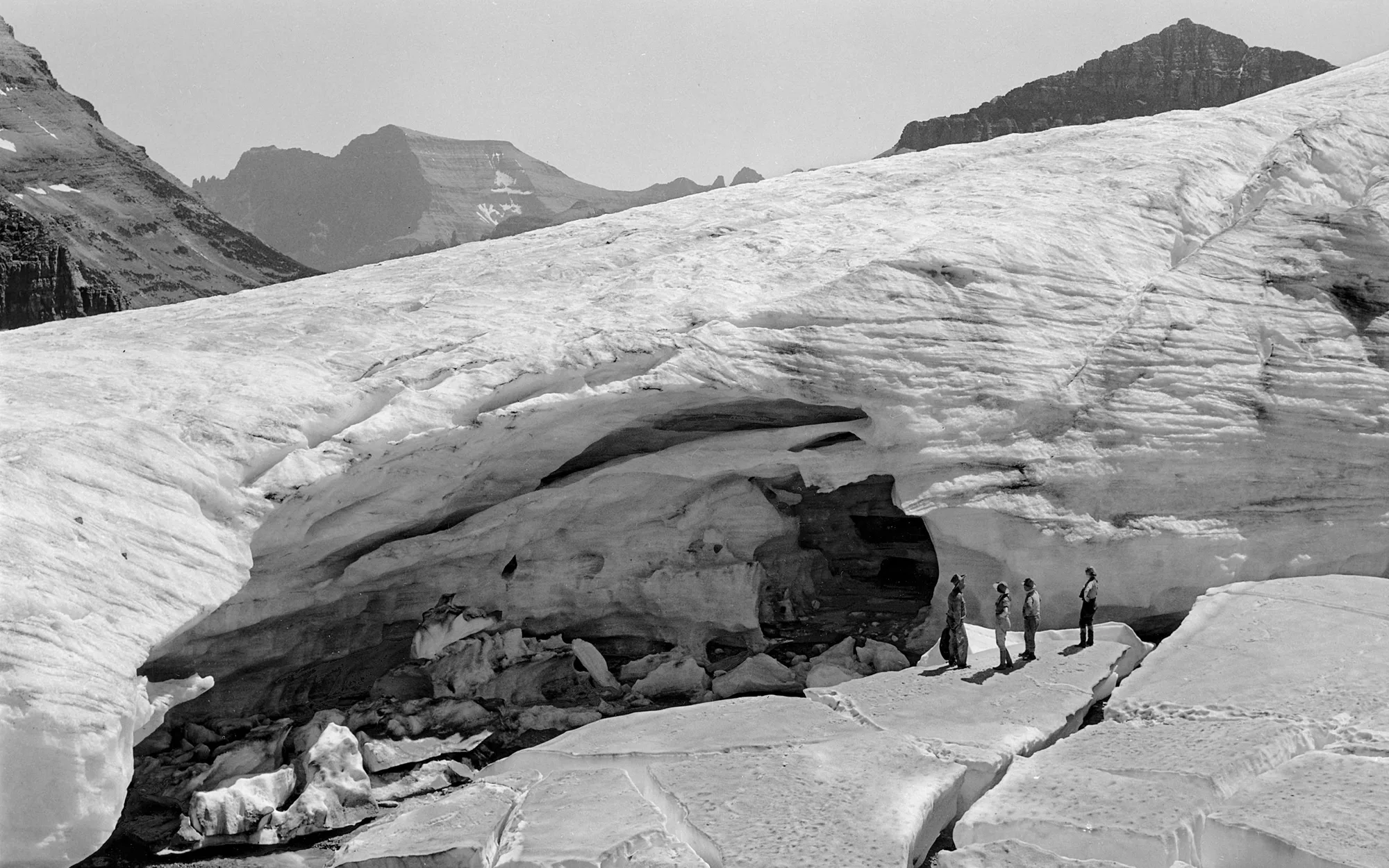
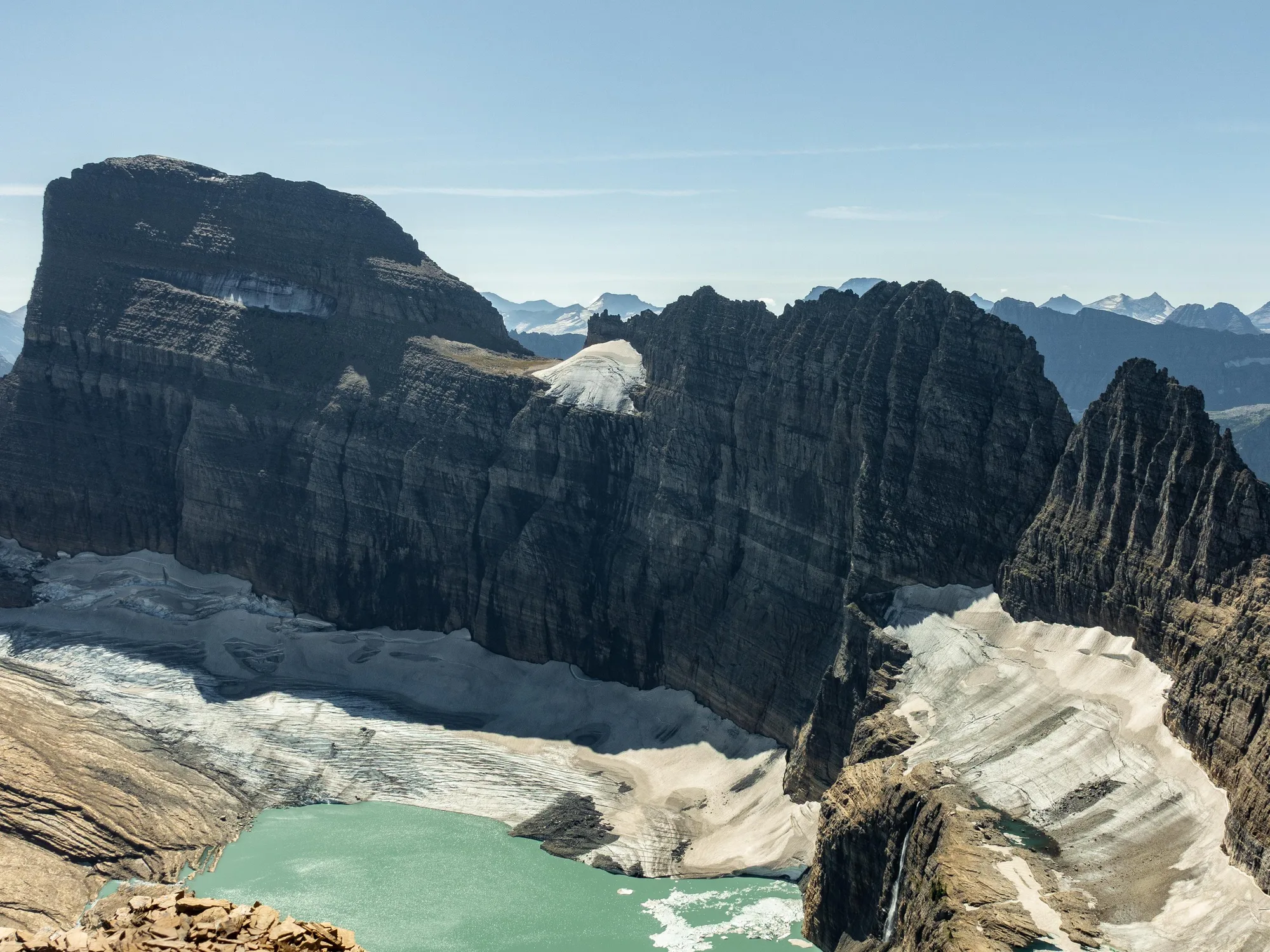
Even once the road is officially open end to end, don't assume the whole park is summer-ready. High-elevation trails around Logan Pass, including the Highline Trail and the approaches to Grinnell Glacier and Iceberg Lake, commonly hold snowfields well into July, and some years require microspikes or an ice axe for sections that look easy on a map. Waterfalls are still near their peak in this window, crowds are noticeably lighter than late July and August, and lodging is easier to find, though shoulder-season weather can turn cold and wet with little warning at elevation.
- 2025 June 13 EARLY
- 2024 June 22 TYPICAL
- 2026 June 22 TYPICAL
- 2022 July 13 HEAVY SNOW / AVALANCHE YEAR
- 2020 July 13 LATE
- 2011 July 13 EXCEPTIONAL SNOWPACK
Full Access, Full Parking Lots
Everything is open. So is everyone's calendar.
This is the only stretch of the year when Going-to-the-Sun Road, Many Glacier, Two Medicine, and the North Fork are all reliably open and passable at the same time. It's also when Glacier's subalpine wildflowers peak, typically in July, with bear grass and glacier lilies filling the meadows around Logan Pass and Hidden Lake Overlook. If wildflowers are the main draw, July is the month to build a trip around, not August.
Access rules here have changed almost every year recently, so treat anything below as a snapshot rather than a permanent policy. For the 2026 season, Glacier is not requiring advance vehicle reservations anywhere in the park, a reversal of the pilot reservation systems the park ran in prior years for the Sun Road corridor and other areas. In their place, the park added a three-hour parking limit at Logan Pass starting July 1 and switched the shuttle to Logan Pass to a ticketed-only system, with tickets released through Recreation.gov for around $1 each. Rangers can also temporarily turn vehicles away from full lots during the busiest midday hours, even without a reservation requirement. Because this system is new for 2026 and past systems didn't survive from one season to the next, check nps.gov/glac directly before a trip rather than relying on last year's rules, including this page's.
Arriving at Logan Pass or Avalanche Creek before 8am is still the most reliable way to get parking without a ticket or a long wait, regardless of whatever the official system looks like in a given year. For a closer look at how the shuttle and parking changes actually play out on the ground, see our Logan Pass parking and shuttle breakdown.
- Entrance fee $35 per vehicle, 7-day pass SUMMER RATE
- Vehicle reservations Not required anywhere in the park for 2026 CHANGES YEARLY
- Logan Pass parking 3-hour limit, begins July 1 NEW FOR 2026
- Logan Pass shuttle Ticketed only, booked on Recreation.gov NEW FOR 2026
- Wildflowers Peak typically in July SUBALPINE MEADOWS
Fewer People, A Narrowing Window
The crowds thin out fast after Labor Day. So does the amount of time you have left before the road closes for the year.
September is the park's best-kept shoulder season secret. Most services stay open through mid to late September, crowds drop sharply once school is back in session, and the road is usually still fully intact. By late September, most in-park lodges and concessions start closing for the year, even while the road itself often stays open a while longer.
The other reason to visit in fall is specific and worth planning around: western larch trees turn a brilliant gold, typically peaking around mid-October, concentrated on the park's west side along the McDonald Creek valley and outside the park along Highway 2. It's a different, shorter-lived show than the maple and oak color most people picture for fall, and it draws its own dedicated group of photographers and hikers who time trips around it specifically.
The tradeoff is a hard deadline. The alpine section of Going-to-the-Sun Road generally closes for the season around the third weekend of October regardless of weather, and an early storm can force a closure well before that, sometimes by late September in a bad year. Once the road closes to vehicles for winter, it closes just past Lake McDonald Lodge on the west side, leaving the rest accessible only on foot, ski, or snowshoe until the following spring's plowing starts the cycle over again. West Glacier, Apgar, and the lower stretch of Lake McDonald stay reachable by car year-round, but that's a small fraction of the park.
If one stretch has to carry the whole trip, the first two weeks of July is the best balance available: the road is reliably open by then in all but the heaviest snow years, wildflowers are close to peak, and the worst of the late-July and August crowding hasn't arrived. The real cost is that in-park lodging for that window is typically booked out six to nine months ahead, so it has to be planned early, not decided on a whim. Anyone who'd rather trade guaranteed full access for smaller crowds and cooler hiking weather should look at the second half of September instead, when the road is usually still complete and rooms can often still be found just a few weeks out.
Turn This Into Your Trip
Answer five quick questions and get a day-by-day plan for Glacier, built around your real dates, your crew, and your pace.
Plan This Trip →Checked directly against nps.gov/glac in August 2026: the Going-to-the-Sun Road overview page (confirming vehicle reservations are not required in 2026), the park's news release confirming the road fully opened for the 2026 season on June 22, the 2026 vehicle reservations page (confirming no parkwide reservation requirement, the new three-hour Logan Pass parking limit, and the ticketed-only Logan Pass shuttle, all new for 2026), the current fee schedule, and the NPS winter-closure page describing where the road closes past Lake McDonald Lodge. Historical Going-to-the-Sun Road opening dates going back to 2010 were cross-checked against contemporaneous NPS news releases and a compiled local reference (Roaming Montana); we treated that source as directional for older years rather than authoritative. Larch fall-color timing came from the Glacier National Park Conservancy (glacier.org). Recreation.gov shuttle ticket pricing (about $1) and the specifics of the 2026 rollout were confirmed through local reporting (Hungry Horse News, Flathead Beacon) since NPS's own pages didn't spell out the exact ticket price at the time of writing. Road-opening dates and any reservation or shuttle system change year to year, so confirm current status at nps.gov/glac before finalizing a trip.