Grand Teton doesn't hide its best views behind long approaches. Most of what makes this park famous for photography sits within a few miles of the main park road, which means the difference between a good frame and a forgettable one usually comes down to timing, not distance.
The five spots below cover reflection shots, a working historic barn, and the view most people are chasing without knowing its real backstory. Each one rewards a different kind of light, so read the timing notes before you build a morning around all of them at once.
Schwabacher Landing
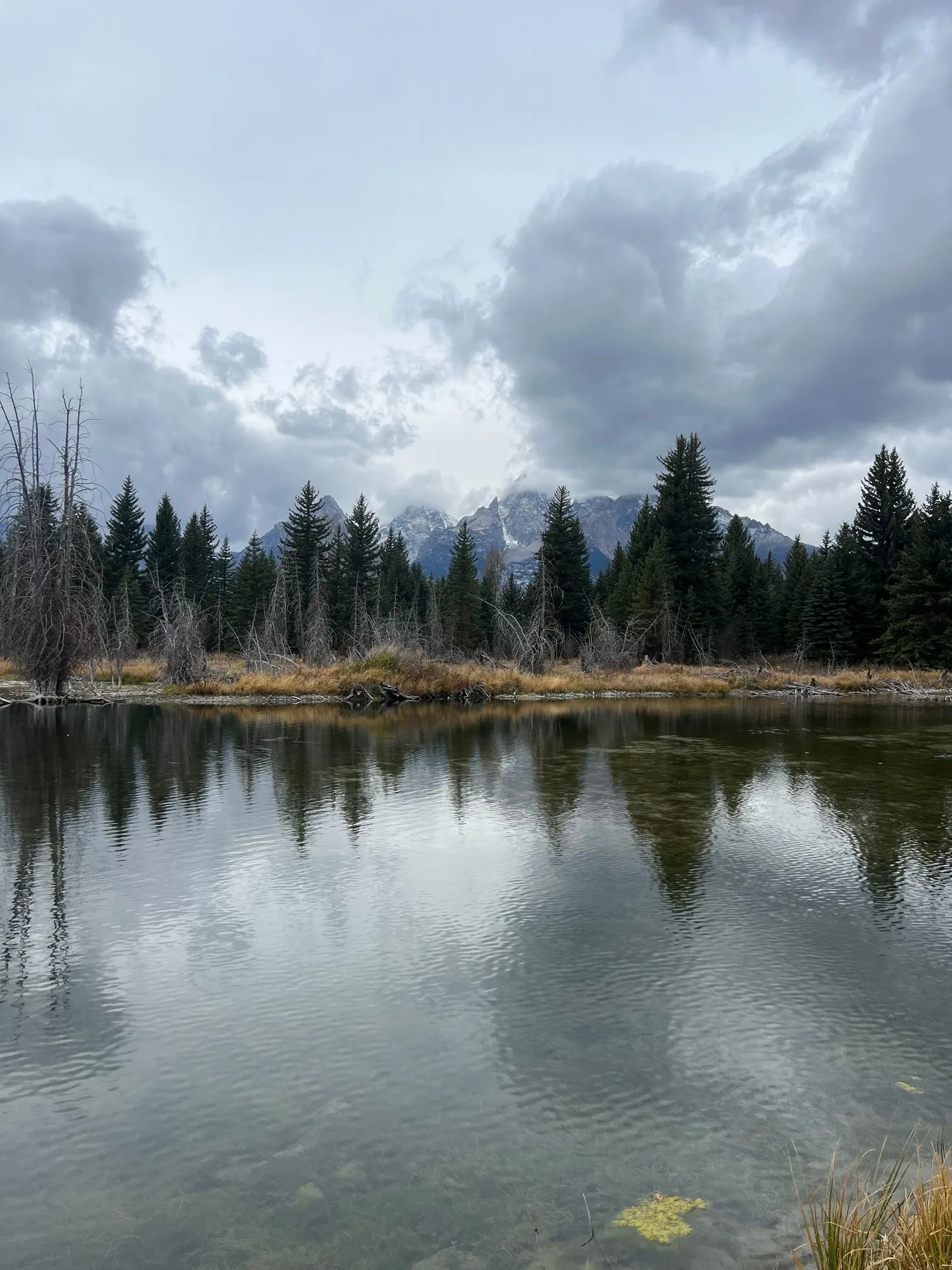
Schwabacher Landing sits off the main park road down a short unpaved spur, and what makes it different from the park's other river viewpoints is the water itself. A series of old beaver dams slows the Snake River into flat, glassy ponds instead of the moving current you get everywhere else along the river corridor. On a still morning those ponds hold a genuinely clean reflection of the Teton Range, cottonwoods and all.
Sunrise is the reason people set alarms for this one. The peaks catch first light while the ponds are usually calmest, before wind picks up later in the day and breaks up the reflection. Face west toward the range from the boardwalk and the lower bank areas, and expect company: this is one of the most visited sunrise spots in the park, so arrive at least 30 to 45 minutes before official sunrise if you want space at the water's edge.
The access road is unpaved but graded and fine for a standard car in dry conditions. Parking is limited to a small lot and a handful of pullouts, and it fills fast in July and August. Moose show up here regularly enough that it's worth a slow look around before you set up a tripod in the reeds.
Oxbow Bend
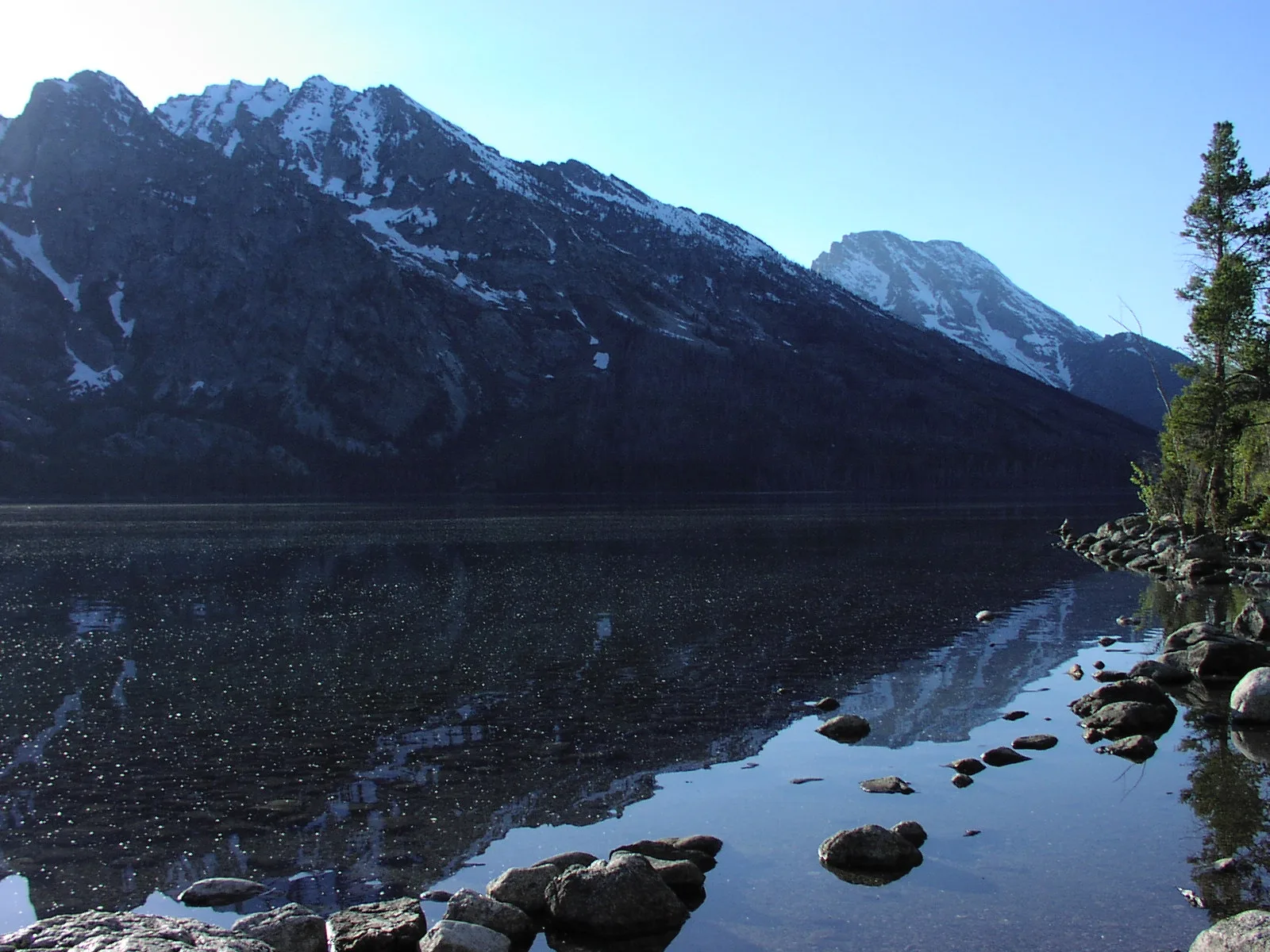
Oxbow Bend is an old river channel that got cut off from the main current, leaving a wide, slow pool where the Snake River runs almost still. On calm days it reflects Mount Moran, the flat-topped 12,605-foot peak that anchors the northern end of the Teton Range, rather than the classic Grand Teton summit itself. That's a useful distinction if you came expecting the same peak you'll see at Schwabacher or the Snake River Overlook.
Sunrise works here for the same reason it works everywhere else on this list: calmer water, lower light angle, warmer color on the peaks. But Oxbow Bend earns a second visit in late September, when the cottonwoods and aspens along the bank turn yellow and orange against the still-green conifers and the first snow on Moran. That combination, water plus fall color plus an early snowline, is specific to this time of year and doesn't repeat at the other spots.
Unlike Schwabacher, this is a paved pullout right off the main road, so it's an easy stop even if you're not committing to a full sunrise outing. The National Park Service also notes it as a reliable spot for pelicans, herons, otters, and moose, so bring a longer lens if wildlife is part of the plan.
Mormon Row and the T.A. Moulton Barn
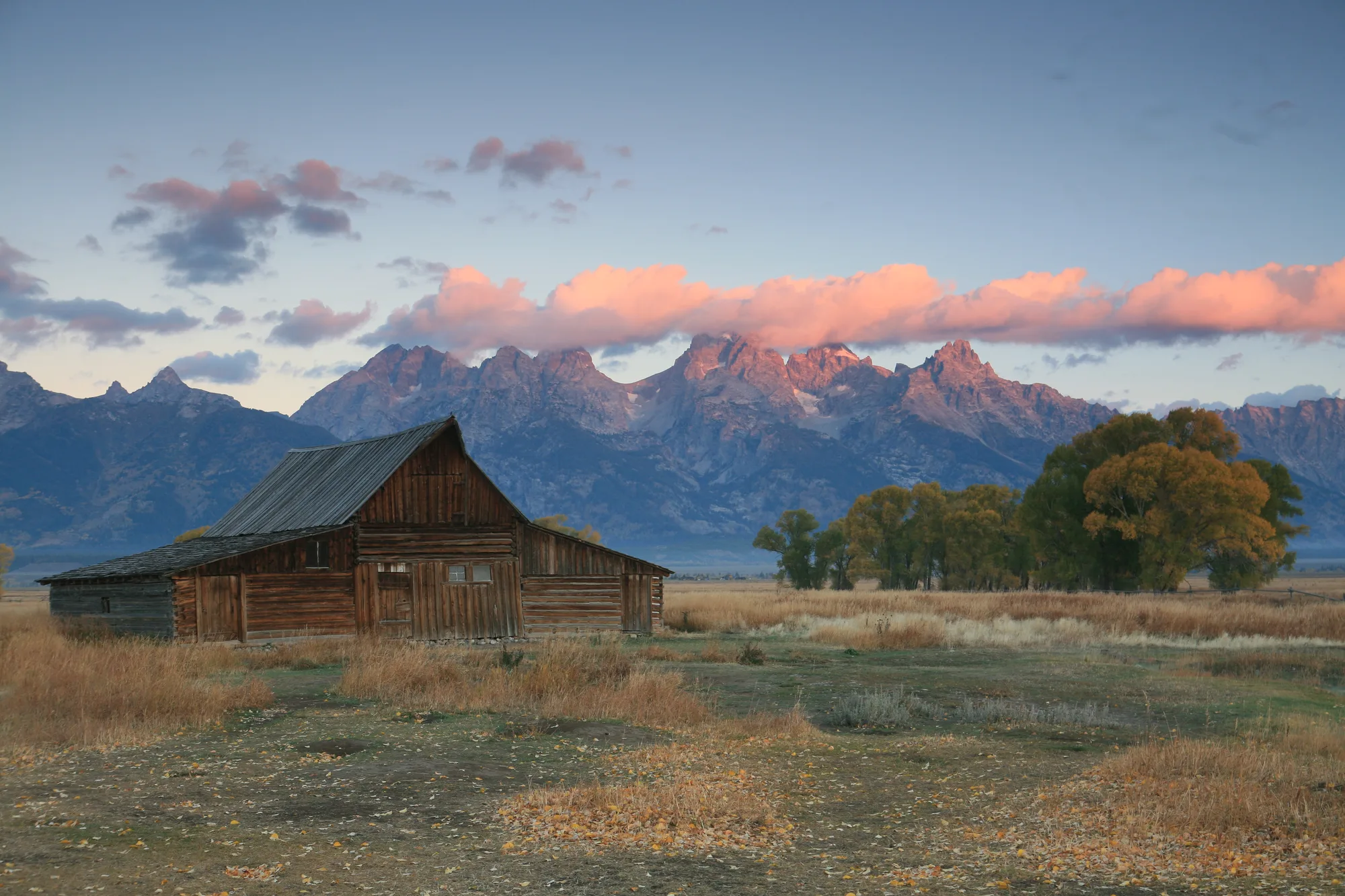
The T.A. Moulton Barn is a real structure with a documented history, not just a photogenic backdrop. Thomas Alma Moulton and his sons built it in stages between roughly 1912 and 1945 on land homesteaded as part of the Mormon Row settlement, and it's still standing today as part of the Mormon Row Historic District within the park. A second, similar structure nearby, the John and Bartha Moulton Barn, is often confused with it in photos, so if you're trying to match a specific image you've seen online, check which barn it actually shows.
Sunrise is the standard time to shoot here, with the barn in the foreground and the Teton Range catching early light behind it, facing roughly west. Because the barn faces the road and the mountains are behind it from the pullout, you're shooting into the range rather than into the sun, which is part of why this composition works so reliably at dawn.
Access is via Antelope Flats Road off Highway 89/191, which is unpaved, level, but rutted in places. There's a dedicated Mormon Row parking area, and the road is closed in winter, so this is a spring-through-fall location. Check current park closures before you go, since seasonal conditions can shift the access window.
Snake River Overlook
Snake River Overlook is the pullout most closely associated with Ansel Adams's 1942 photograph "The Tetons and the Snake River," one of the most reproduced images to come out of the National Park Service and a piece included on the Voyager Golden Record. The connection between this specific overlook and that photograph is real and widely cited, including by the National Park Service itself. What's not settled is whether this modern pullout is exactly where Adams stood.
The NPS's own page for the overlook says plainly that "trees have grown and the exact location is not known." Decades of forest growth along the riverbank now block the sweeping bend of the Snake River that made the original composition work, so photographers shooting from the current railing today get a view with the same mountains but a mostly hidden river, not a clean match to the 1942 print. If you're chasing the exact Adams frame, expect to be disappointed, and treat the overlook as the general area rather than a guaranteed replica shot.
That said, it's still a legitimately strong sunrise location on its own terms: an elevated view straight across the valley to the full Teton Range, easy paved access right off the main park road, and none of the driving or dirt-road commitment that Schwabacher or Mormon Row require. Go for the mountains, not for a recreation of someone else's photograph.
Jenny Lake and String Lake
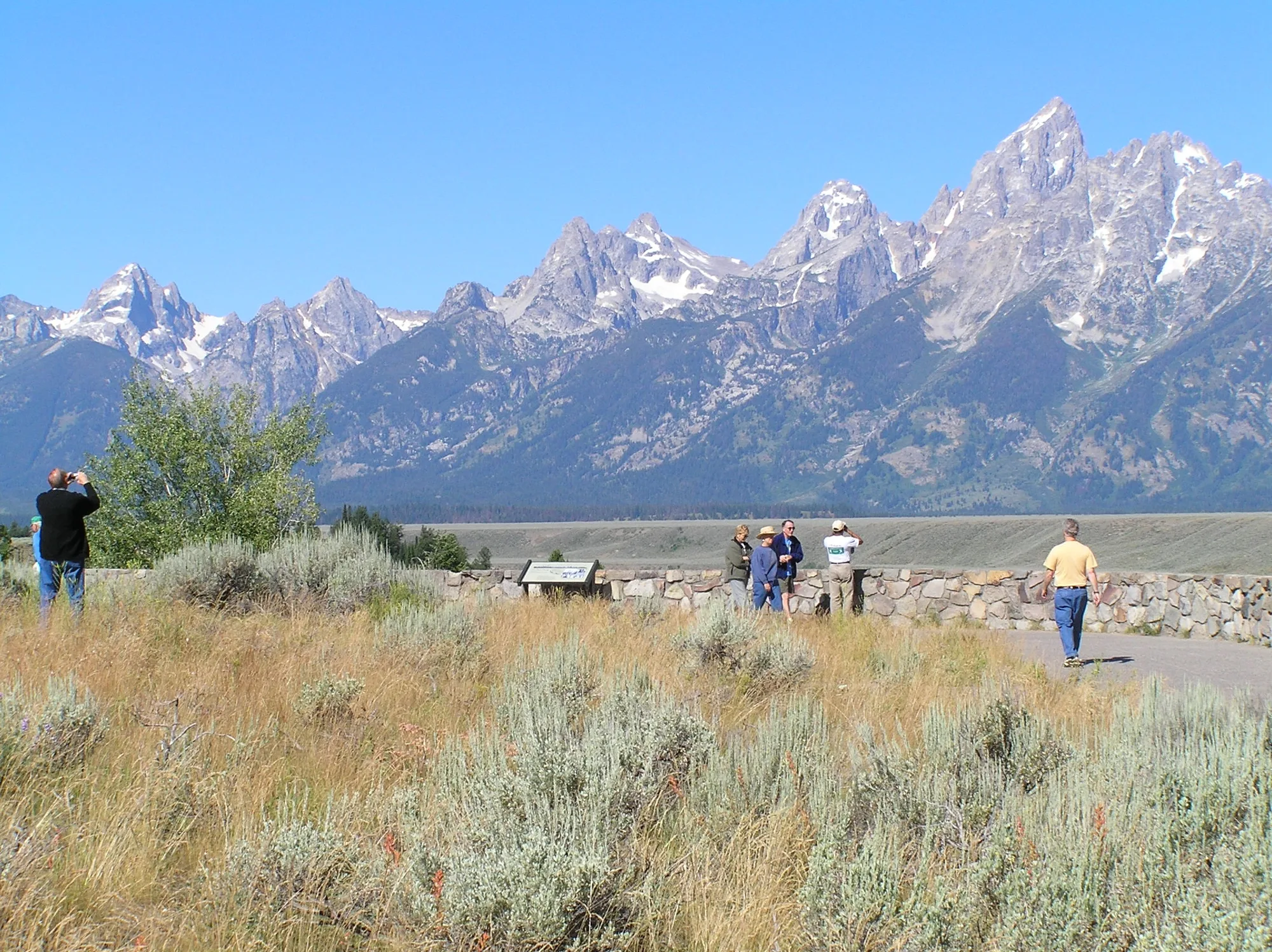
If the earlier stops on this list mean driving unpaved roads before dawn, Jenny Lake and String Lake are the alternative for a lower-effort morning. Jenny Lake sits directly below the central peaks, and its eastern shore, near the visitor center and boat dock, gives a straightforward reflection shot without a long hike. String Lake, a few minutes north, is shallower and narrower, and its shoreline trail offers multiple vantage points without needing a boat or a long walk in.
Both lakes work best early, before wind moves in off the peaks and breaks the water's surface. Face west or southwest from the shore for the classic range reflection. Because both are accessible from paved parking areas near the Jenny Lake and String Lake trailheads, they're also the most realistic option if you're traveling with people who aren't up for a 5 a.m. drive to Schwabacher.
Fewer crowds show up here at sunrise than at the barn or the overlook, simply because the composition takes a bit more searching along the shoreline rather than one obvious pullout. That makes it a reasonable second stop after Schwabacher, if the light holds.
Sequencing matters more than people expect. Schwabacher, Oxbow Bend, and Mormon Row are all best within roughly 30 minutes of actual sunrise, and they're spread across enough distance that trying to hit all three at their individual peak light usually means picking one to shoot well and treating the others as bonus stops on the drive back. Snake River Overlook holds decent light for longer after sunrise since it's an open, elevated view, which makes it a good fourth stop once the tighter-timed locations are done. Jenny Lake and String Lake, being calmest early, pair naturally with whichever direction you're already driving that morning.
Turn This Into Your Trip
Answer five quick questions and get a day-by-day plan for Grand Teton, built around your real dates, your crew, and your pace.
Plan This Trip →Location details, access notes, and current conditions checked against nps.gov, including the NPS place pages for Snake River Overlook, Oxbow Bend, Mormon Row, and the T.A. Moulton Barn, plus the NPS Mormon Row Historic District article and Grand Teton's entrance fee FAQ (standard vehicle fee $35, valid 7 days, checked August 2026). On the Ansel Adams claim specifically: the National Park Service's own Snake River Overlook page states directly that tree growth has obscured the original 1942 view and that "the exact location is not known," so we did not present a single confident spot as the precise place Adams stood. The T.A. Moulton Barn's construction history and current standing status were cross-checked against Wikipedia's sourced entry for the barn. Ansel Adams's photograph title, 1942 date, and Voyager Golden Record inclusion were confirmed via Wikipedia's entry on "The Tetons and the Snake River." Seasonal and wildlife notes for Oxbow Bend and fall color timing were cross-checked against general park photography sources; readers should verify current road closures (notably Antelope Flats Road, which closes in winter) directly with nps.gov before a trip.