Construction on Fort Jefferson began in 1846, on a spit of sand called Garden Key, seventy miles from the nearest town. Thirty years later, the Army gave up and walked away. The fort was never finished, and by the time it wasn't, the weapons it was built to stand against had already changed enough to make it pointless.
A Fort Nobody Finished
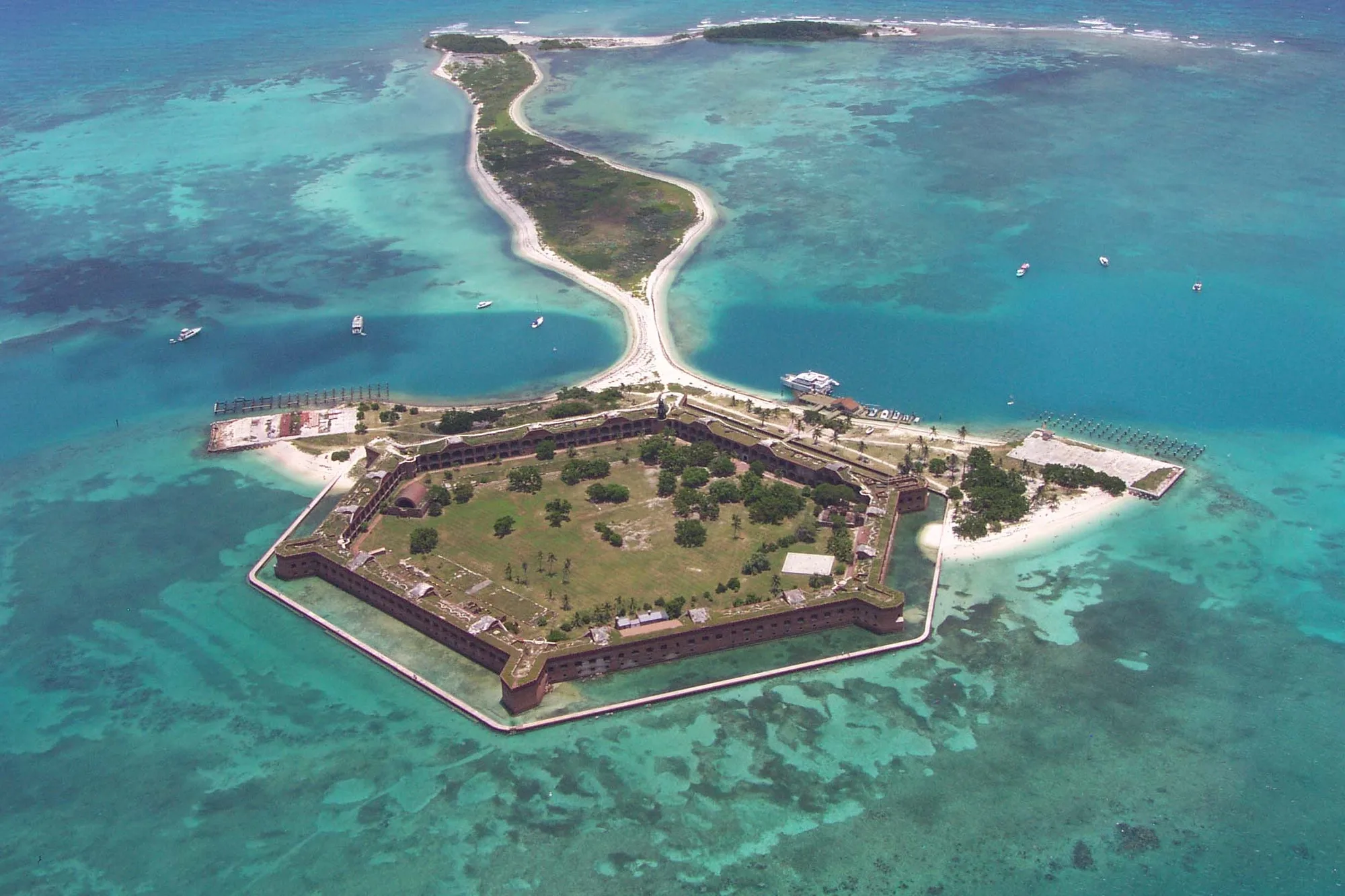
Construction began in 1846 on Garden Key, supervised by the Army Corps of Engineers, and much of the earliest labor was done by enslaved workers brought over from Key West. The plan was ambitious even by the standards of the era's coastal defense program: a fort built from more than 16 million bricks, making it, by the National Park Service's own account, the largest masonry structure in the Western Hemisphere. It was meant to be one link in the Third System, a chain of coastal fortifications running from Maine to California, positioned here specifically to guard the shipping channel connecting the Gulf of Mexico, the Caribbean, and the Atlantic.
The problem was timing. By 1862, advances in rifled cannon technology had made brick fortifications like Fort Jefferson vulnerable in a way earlier smoothbore artillery never could. The fort that was supposed to anchor American coastal defense for a generation was already becoming outdated while the bricklayers were still working. Construction limped along anyway, in fits and starts, for another dozen years.
- Construction 1846-1874 · ~30 YEARS, NEVER FINISHED
- Material 16+ MILLION BRICKS
- Superlative LARGEST MASONRY STRUCTURE IN THE WESTERN HEMISPHERE
- Obsolete BY 1862, RIFLED CANNON TECHNOLOGY
Plan a Trip to Fort Jefferson
Reachable only by boat or seaplane, seventy miles west of Key West.
Open the Trip PlannerA Prison, a Plague, a Battleship's Last Stop
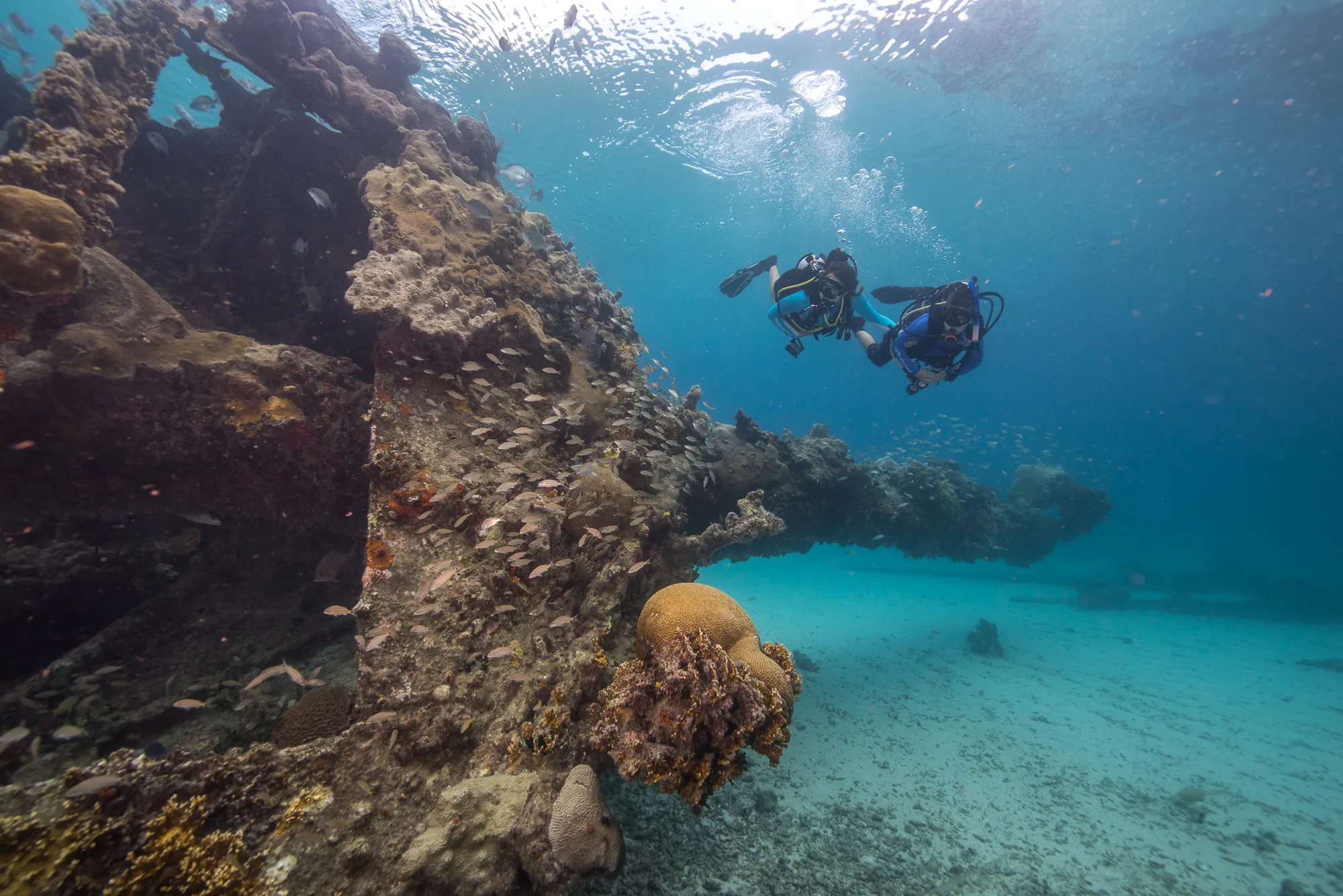
By the time the Civil War broke out in 1861, Fort Jefferson had already become more useful as a naval anchorage than as a fighting fort. Union forces held the harbor throughout the war and used it to help blockade Confederate shipping, and the fort itself took on a role its builders hadn't planned for: a prison, first for Union deserters, later for a small group of men convicted in the conspiracy to assassinate Abraham Lincoln.
At its peak, nearly 2,000 people lived on this island, soldiers, prisoners, laborers, and their families, despite the fact that it has no source of fresh water of its own. The Army finally abandoned construction in 1874, work having sputtered on for close to thirty years without ever producing a completed fort.
In 1898, the USS Maine left the Dry Tortugas on its way to Havana, a stop nobody aboard could have known would be the ship's last before it exploded in Havana harbor and helped trigger the Spanish-American War.
The fort was designated a national monument in 1935 and became Dry Tortugas National Park in 1992. Sixteen million bricks, most of them laid by hands that had no say in the matter, still sit in open water exactly where the Army Corps of Engineers put them, guarding a shipping lane against a kind of attack that had already changed shape before the walls finished rising.
- Peak population ~2,000
- Uses NAVAL ANCHORAGE, UNION PRISON, LIGHTHOUSE SITE
- 1898 USS MAINE'S LAST DEPARTURE, BOUND FOR HAVANA
- Park status NATIONAL MONUMENT 1935 → NATIONAL PARK 1992
Construction timeline, workforce, brick count, and the Western Hemisphere superlative checked against the National Park Service's official Dry Tortugas overview page and its Fort Jefferson history page. Obsolescence timing, prison use, peak population, and the USS Maine's 1898 departure checked against NPS's official "Dry Tortugas was a Part of American History" article and Fort Jefferson tour article. National monument and national park designation dates checked against the same NPS sources.
Visitors today can walk the same brick corridors the Army Corps of Engineers never finished, past cannon embrasures that were never fully armed, in a fort designed to fight a war that had already moved past it. It's a strange kind of ruin: not fallen, not destroyed, just permanently, monumentally incomplete, sitting in some of the clearest water in the country.