
A calf born on the tundra north of the Brooks Range can be on its feet within an hour and running well enough to keep up with the herd inside a day or two. It has to be. The animal it's born into, the Western Arctic Caribou Herd, doesn't stay in one place long enough for slowness to be survivable, covering an average of roughly 2,000 miles a year between calving grounds on the coastal plain and wintering range south of the mountains, with individual animals in some years walking well past that.
A Herd That Never Really Stops Moving
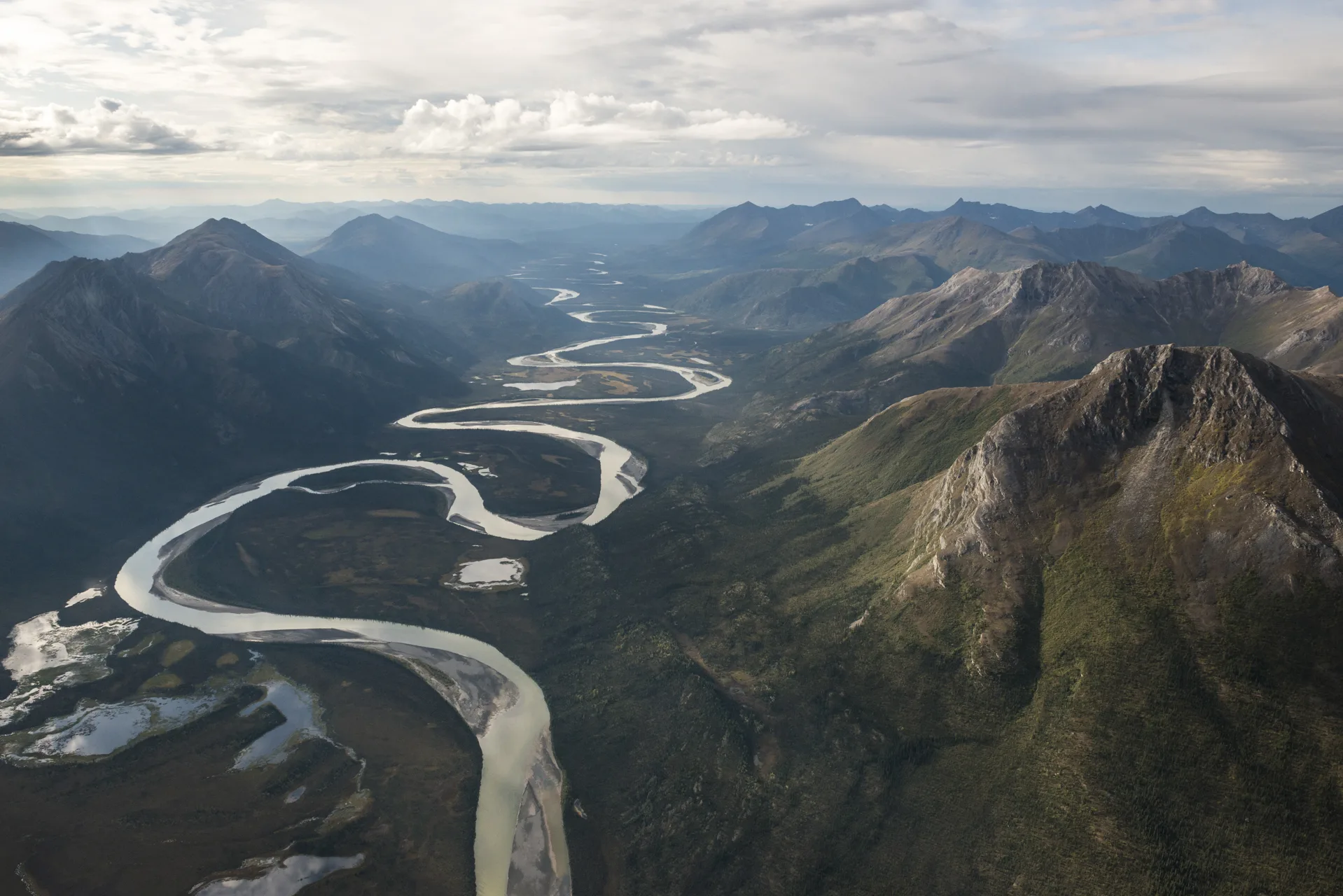
The Western Arctic Herd is the largest of Alaska's caribou herds, ranging across a swath of northwest Alaska far bigger than any single park boundary, and Gates of the Arctic sits directly across its migration corridor between calving grounds near the Arctic coast and wintering areas south of the Brooks Range. Every spring, pregnant cows lead the push north first, often arriving at the calving grounds within days of each other regardless of where they wintered, and every fall the whole herd reverses course. The National Park Service has tracked GPS-collared animals covering well over 2,000 miles in a single year, and the agency's own records include at least one individual caribou logged moving more than 2,700 miles over twelve months, one of the longest tracked migrations of any land mammal on the continent.
The animals cross rivers as readily as they cross open tundra, swimming where they have to and, in some seasons, crossing sea ice near the coast. A newborn calf's mobility is part of what makes the whole migration possible: within an hour of birth it can stand, and within a day or two it can move at a pace closer to an adult's than a newborn's, because a herd that outruns its own predators and outlasts an Arctic winter has no real option to wait for a slow start.
- Average annual distance ~2,000 MILES
- Longest single animal tracked 2,700+ MILES IN A YEAR
- Range LARGEST HERD IN ALASKA, NORTHWEST REGION
- Calf mobility STANDING WITHIN AN HOUR OF BIRTH
Plan a Gates of the Arctic Trip
Time a visit right and the Western Arctic Herd's migration is one of the few wildlife spectacles this remote park offers up close.
Open the Trip PlannerFewer Caribou Than Anyone Has Counted in Decades
The Western Arctic Herd peaked at roughly 490,000 animals in 2003, the largest count in its recorded history. By 2016 that number had fallen to around 201,000, and the most recent population survey puts the herd at roughly 121,000 animals, a decline of close to 75 percent from its 2003 peak. State and federal biologists point to a mix of likely factors rather than a single cause: reduced calf survival, changing predator pressure, warmer summers that bring more insect harassment and less nutritious forage, and winter icing events that can bury lichen under a layer caribou can't dig through. None of these fully explains the decline on its own, and the herd's numbers are still being actively studied.
The decline isn't unique to this one herd. Caribou populations across the Arctic have been trending downward over recent decades, a pattern regional wildlife agencies and federal researchers have documented across multiple herds and multiple countries, not just in northern Alaska. For the communities, including Anaktuvuk Pass, that still depend on the Western Arctic Herd for subsistence hunting, state and federal managers have responded with tighter harvest restrictions aimed at giving the herd room to recover. Whether it does is still an open question. What isn't in question is that the animal now crossing Gates of the Arctic each spring and fall is walking the same 2,000-mile route its ancestors always have, in dramatically smaller numbers than a visitor would have seen twenty years ago.
- 2003 peak ~490,000
- 2016 ~201,000
- Most recent count ~121,000
- Decline since 2003 ~75 PERCENT
Migration distances, calf mobility, and herd range checked against the National Park Service's own caribou pages for Gates of the Arctic. Population figures and decline checked against state and federal wildlife survey data as reported in December 2025 Alaska news coverage of the Western Arctic Caribou Herd count, with broader Arctic caribou trends checked against federal research summaries. Where exact current figures vary slightly between sources, we've used the most recently reported counts.
That calf standing up within an hour of being born doesn't know any of this. It only knows to get up and keep moving, the way its herd has moved through this same gap in the Brooks Range for longer than anyone has been counting. The counting itself is the newer part, and right now, the numbers it's turning up are smaller every time someone checks.