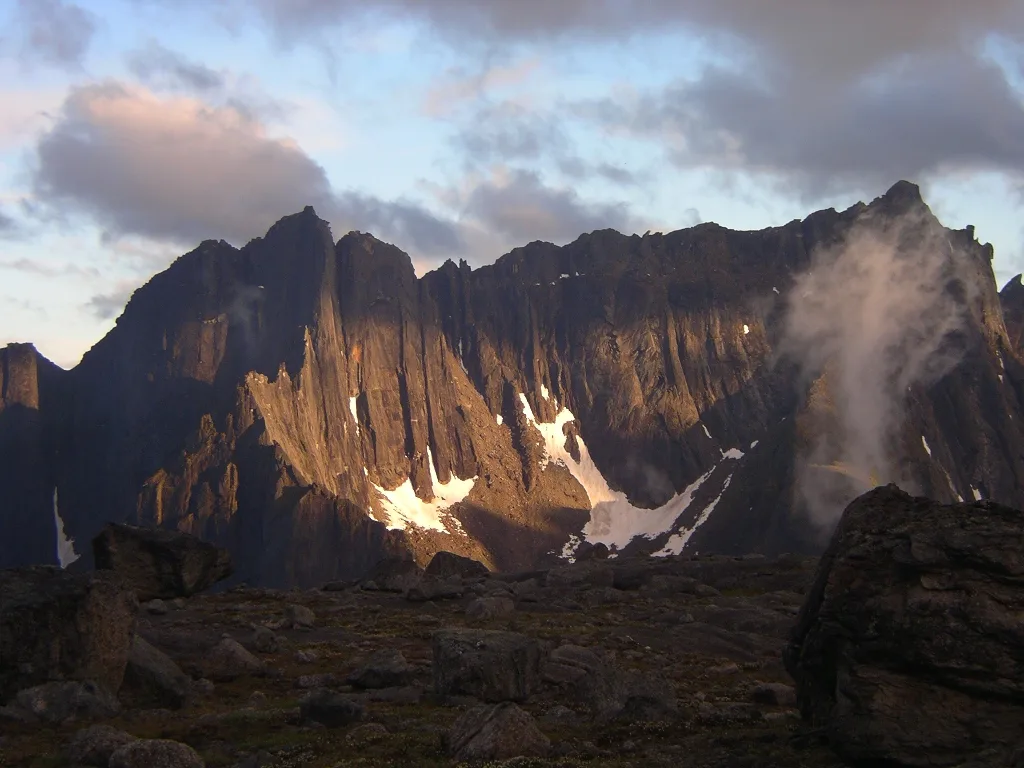
In the summer of 1929, a 28-year-old forester named Robert Marshall boated up the North Fork of the Koyukuk River and passed between two mountains standing on either side of the water like a threshold. He called them the Gates of the Arctic, a name for the feeling of leaving, in his own words, the world of man behind. He'd spend the last ten years of his life trying to make sure that feeling stayed available to everyone else.
Two Peaks on a Map With No Names
Marshall wasn't a casual explorer. Born January 2, 1901, in New York City, he earned a forestry degree from Syracuse in 1924, a master's from Harvard in 1925, and eventually a PhD in plant physiology from Johns Hopkins in 1930, all before he turned 30. He joined the Forest Service in 1925, working out of a research station in Missoula, Montana, studying how forests regenerated after fire. But it was Alaska that pulled at him specifically because so much of it was still unmapped, and in 1929 he made his first trip north to the upper Koyukuk River and the central Brooks Range to study tree growth at the edge of the timberline.
He ended up spending roughly 27 months total in the region across 1929 through 1931, based much of that time out of the small mining settlement of Wiseman, where he also conducted informal sociological research on the community living there. Somewhere along the North Fork of the Koyukuk during that first 1929 trip, he named two adjacent peaks, Frigid Crags and Boreal Mountain, "the Gates of the Arctic," describing the passage between them as the point where a traveler left the world of man behind. It was a small act of naming that quietly outlasted him by nearly a century.
- Born JAN. 2, 1901, NEW YORK CITY
- Degrees SYRACUSE (1924), HARVARD (1925), JOHNS HOPKINS PHD (1930)
- First Alaska trip 1929
- Named the Gates FRIGID CRAGS & BOREAL MOUNTAIN, 1929
- Time in the Brooks Range ~27 MONTHS, 1929–1931
Plan a Gates of the Arctic Trip
Frigid Crags and Boreal Mountain still frame the North Fork Koyukuk exactly as Marshall found them.
Open the Trip PlannerThe Wilderness Society, and a Legacy That Outlived Him
Marshall turned his Alaska years into a book, "Arctic Village," published in 1933 and picked up by the Literary Guild as a bestseller, a rare feat for a sociological study of a small mining settlement most readers had never heard of. The same year he published "The People's Forests," arguing for public ownership of American timberland, and he took a post as director of the Forestry Division at the Bureau of Indian Affairs, where he recommended protecting 4.8 million acres of Indian reservation land as roadless wilderness. In 1934, he met with fellow conservationists Benton MacKaye and Harvey Broome in Knoxville, Tennessee, and on January 21, 1935, the group formally founded the Wilderness Society, with Marshall providing the bulk of its early funding, starting with an anonymous $1,000 gift.
He kept working right up to the end. As director of the Forest Service's Division of Recreation and Lands starting in 1937, he helped draft the U-1 and U-2 regulations, signed in September 1939, which protected designated wilderness areas from roads and logging, a direct forerunner of the Wilderness Act that wouldn't pass until 1964. Marshall never saw that vote. He died of heart failure on a train from Washington, D.C. to New York on November 11, 1939, at 38, leaving $1.5 million to wilderness and civil-liberties causes. His last book on Alaska, "Alaska Wilderness: Exploring the Central Brooks Range," wasn't published until 1956, seventeen years after his death, and it was that book, alongside "Arctic Village," that helped build the case for eventually protecting the land he'd named. Gates of the Arctic became a national park in 1980, forty-one years after he died.
- "Arctic Village" published 1933, LITERARY GUILD BESTSELLER
- Wilderness Society founded JAN. 21, 1935
- U-1/U-2 regulations signed SEPT. 1939
- Died NOV. 11, 1939, AGE 38
- Gates of the Arctic established as a park 1980
The naming of Frigid Crags and Boreal Mountain, and Marshall's direct connection to Gates of the Arctic, checked against the National Park Service's own account of his life and its history of the Gates naming. Biographical details, the Wilderness Society's founding, his writings, and his death checked against published biographical sourcing consistent with the National Park Service's record.
Frigid Crags and Boreal Mountain still stand exactly where Marshall found them, framing the same stretch of the North Fork Koyukuk, with no road any closer to them now than there was in 1929. He never got to see the park his writing helped create, and he never got to see the Wilderness Act his regulations helped write. What he did get, in the ten years he had left after that first trip, was enough time to make sure both of those things eventually happened anyway.