Most visitors to Kings Canyon see exactly one sequoia grove: Grant Grove, right off Highway 180, with a paved parking lot and a half-mile loop to the General Grant Tree. Almost nobody sees the biggest one. Redwood Mountain Grove, a few miles south, has no paved road in at all, and by area it's the largest remaining natural grove of giant sequoias on Earth.
The absence of a road isn't an oversight. It's most of the reason the grove became, starting in the 1960s, the single most important place in America for understanding a fact that changed how national parks manage fire: giant sequoias don't just survive fire. They need it.
A Grove You Reach Only by Trail
The National Park Service describes Redwood Mountain Grove as one of the largest groves of giant sequoia trees in the world, and by acreage it surpasses even Grant Grove and Sequoia National Park's famous Giant Forest, though the single largest tree by volume, General Sherman, still stands elsewhere. The trailhead sits about two miles off Highway 180 down an unpaved, sometimes rough road, and from there roughly ten miles of trail, split across the Redwood Canyon, Sugar Bowl, and Hart Tree routes, wind through the grove itself. The Park Service notes the area isn't accessible by vehicle in winter at all. The grove's own largest tree, the Hart Tree, has no visitor center pointing the way to it, just a trail junction and a sign.
What the Tree Rings Actually Showed
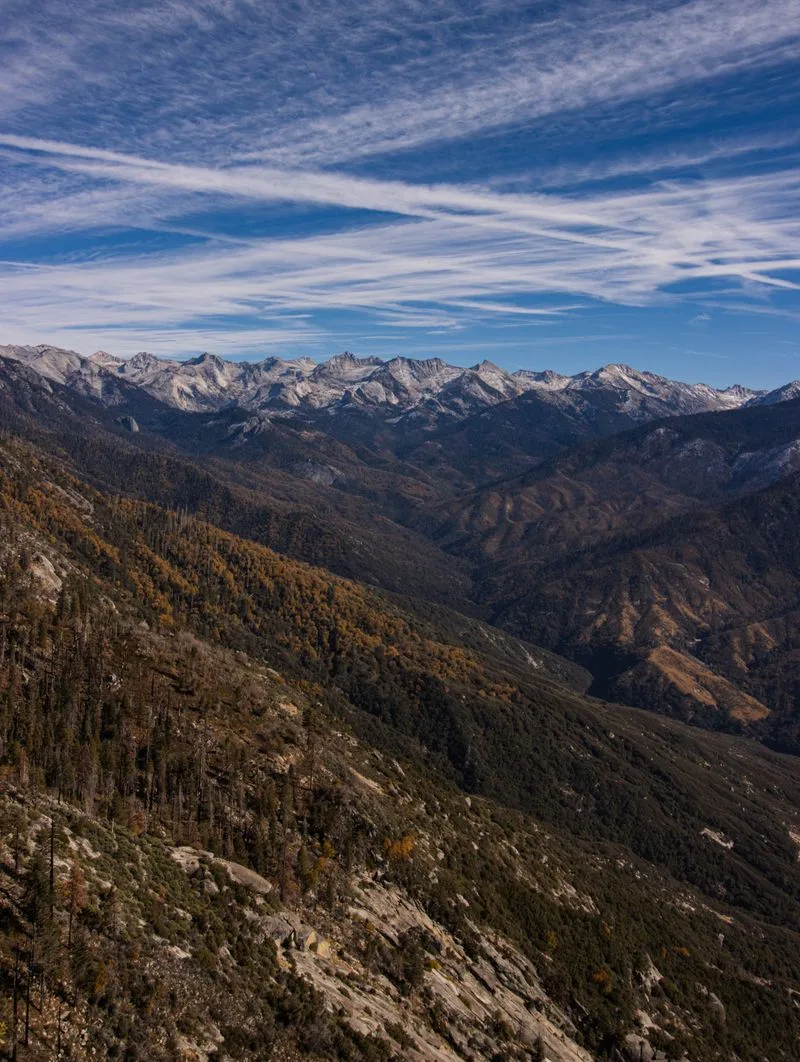
In 1979, researchers Bruce Kilgore and Dan Taylor published a study built entirely on this ground, examining nine hundred thirty five fire scars across two hundred twenty stumps in the Redwood Creek drainage. What they found reshaped fire policy nationally: before 1875, fires burned through this forest roughly every nine years on west-facing slopes and every sixteen years on east-facing ones, a rhythm the data showed was too frequent to explain by lightning alone, meaning Native American burning practices had likely been sustaining it. Fire evidence declined sharply after that burning was eliminated in the early 1870s and became almost nonexistent after 1900, once active suppression took hold. Kilgore's work built on earlier, more contentious advocacy by UC Berkeley forestry professor Harold Biswell, nicknamed Harry the Torch for pushing prescribed fire against considerable institutional resistance, and it helped translate the 1963 Leopold Report's recommendations into real Park Service practice. The first controlled burns in Redwood Canyon began in 1969.
Plan Your Kings Canyon Visit
Redwood Canyon has no paved access and no facilities. The trip planner can help you fit a hiking-only grove into a Highway 180 trip.
Open the Trip PlannerThe Grove Was Tested for Real
The KNP Complex Fire burned through roughly forty percent of Redwood Mountain Grove in 2021, with an estimated five hundred fifty four acres, about twenty three percent of the grove's total area, experiencing high severity and mortality rates above seventy five percent in those specific patches. It was a genuinely different kind of fire than the low, frequent burns Kilgore's research described, larger and hotter, fueled by more than a century of accumulated fuel that decades of suppression had allowed to build up before prescribed burning resumed. The grove's own iconic Roosevelt Tree, one of its largest, was among the losses.
Why the Research Still Holds
Giant sequoia cones stay sealed for years, and it takes real heat to melt the resin holding them shut and release the seeds inside, along with the bare, ash-cleared mineral soil those seeds need to actually germinate. A sequoia forest without periodic fire doesn't stay static. It slowly stops reproducing, which is exactly the mechanism Kilgore's fire-scar data pointed to decades before anyone watched it play out at this scale. The frequent, low-intensity fires this grove is famous for studying are still the model the Park Service works toward, using it as the baseline for prescribed burns precisely because a century without them is what made 2021 so much more destructive than the fire history under the bark.
- Status LARGEST SEQUOIA GROVE, BY AREA
- Road access NONE, TRAIL ONLY
- Pre-1875 fire interval 9-16 YRS
- 2021 fire, high severity ~554 ACRES
Facts and figures checked against the National Park Service's Redwood Canyon Trail and Redwood Mountain Overlook pages, Bruce Kilgore and Dan Taylor's 1979 study in the journal Ecology, and NPS reporting on the 2021 KNP Complex Fire's impact on the grove. The grove's exact acreage is described by NPS in general terms ("one of the largest" or "the largest") rather than a single confirmed number; we've kept the comparison general rather than state an unverified figure as fact.
Walk the Hart Tree Trail today and the evidence of both fires is visible in the same square mile: old, healthy giants that survived a century of low burns before suppression began, and blackened ground from 2021 where the fuel had built up too long. Redwood Canyon isn't just the biggest sequoia grove left standing. It's the place that taught the agency managing it that leaving a sequoia forest alone was never actually the safest option.